ADVERTISEMENT

Guide: MIDI Controller with Piano Keys

  • A MIDI controller with piano keys is the ideal choice for playing piano VSTs or piano apps.
  • Since MIDI controllers are primarily used to control other devices and instruments via MIDI, USB, or Bluetooth, they can also be described as “piano keyboards without built-in sounds”.
  • Many conventional MIDI controllers come with inferior keyboards. Find out which ones are suitable here.
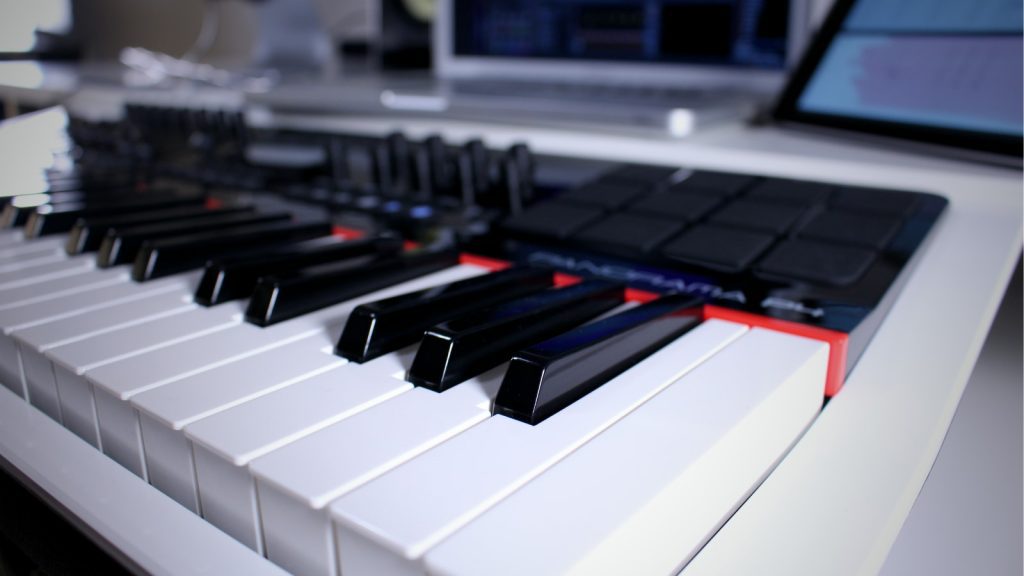
MIDI Keyboard with Piano Keys - Nektar Panorama P4
ADVERTISEMENT

If you want to play a software instrument or use a piano app, you need a MIDI controller with piano keys. MIDI controllers differ from conventional keyboards and synthesizers in one fundamental way: They cannot produce sound. Instead, you use them to control sounds in other devices, making them a piano keyboard without built-in sounds.

ADVERTISEMENT
ADVERTISEMENT

MIDI controllers have many names: Master keyboard, USB keyboard, controller keyboard, MIDI controller, piano controller, etc. All of these terms usually refer to a keyboard instrument that connects to your computer to control software instruments installed there.

MIDI Keyboard Controls
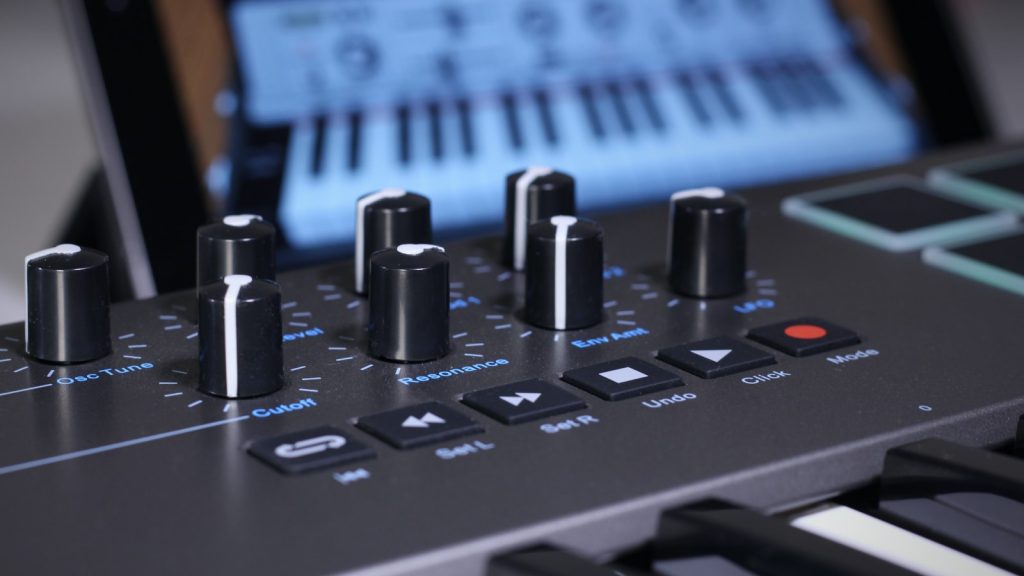
More than just keys: MIDI keyboards often have a variety of knobs, buttons, and pads. These are used to control the sequencer software (DAW) - the term controller keyboard aptly describes this functionality.

MIDI Controller with Piano Keys and Hammer Action

If you want a great playing experience, you need a good keyboard – usually an 88-key piano keyboard, other features are secondary. However, many MIDI controllers leave a lot to be desired in terms of keyboard quality.

Our guide to ‘Buying a Hammer Action MIDI Controller’ gives you an overview of what to look for.

The Best Affordable Keyboard

In principle, you can use any digital piano as a MIDI controller. But if you are on a budget, take a look at the latest entry-level portable pianos. With built-in USB-MIDI these compact digital pianos fit into any MIDI recording studio.

Lightweight, Portable – Ideal for Live Gigs!

For live performance, you may want an 88-key keyboard that’s lightweight above all else. In this case, a heavy hammer action keyboard is not always the best solution – while it may play much better, greater portability may be worth the compromise.

Some manufacturers, such as Nektar Technology, build MIDI controllers with piano-style keys. The Panorama P4/P6 shown above is an interesting example: Here, the keys have the shape but not the feel of a piano key. The keys are easy to depress, but they’ll suffice for playing piano in a home studio, even if the response resembles that of a synthesizer.

Casio CDP-S110 BK (Image Source: Casio)

Price/Performance Tip: Casio CDP-S110

This small entry-level piano is a hit! For well under 500 Euros, you get a really good keyboard with graded hammer action and an ivory-feel top layer. Combined with piano apps such as e-Instruments Pure Piano or Korg Module as well as Piano VSTs, you’re in for a great playing experience. If you can get your hands on one of the few remaining predecessor models, you can even get the same playing comfort for less than 400 Euros.

Pros and Cons

  • Solid digital piano for beginners
  • Great playing feel
  • Synthetic ivory keytops
  • Compact and lightweight
  • Simple foot switch instead of sustain pedal

Henrik Bruns

→ REVIEW

A big plus is the high-quality hammer-action keyboard, which is unparalleled in this price range in terms of playability and ebony/ivory keytops. The simple controls are typical for this price range.

CDP-S110 BK :   299,00 €

TO THE OFFER

CDP-S110 WH :   299,00 €

TO THE OFFER

CS-46 P Stand :   89,00 €

TO THE OFFER
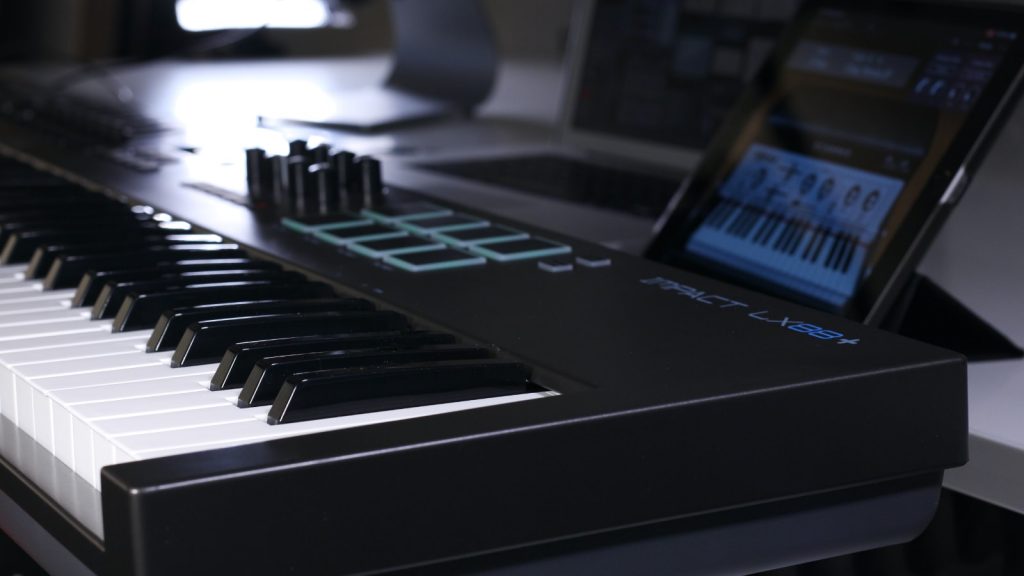
MIDI Keyboard with Piano Keys: Nektar Impact 88+
While the Nektar Impact 88+ features a semi-weighted keyboard, it serves as an excellent MIDI controller with piano keys for live use and is highly portable.

Alternative: MIDI Controller with Semi-Weighted Keys

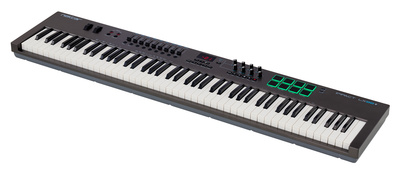
The Nektar Impact LX88+ may be a better alternative: Compared to the Panorama P4, it trades fewer controller functions for a better keyboard. The semi-weighted keys are still not comparable to a real hammer action keyboard, but the keys at least have a non-slip surface.

A great alternative, especially for electric piano VSTs. An important point in comparison to a hammer action keyboard: With a semi-weighted keyboard, you can also play other keyboard sounds such as pads, organ, clavinet, etc. very well.

Connecting a MIDI Controller via MIDI or USB?

Every MIDI controller has at least one USB port for connecting to an audio PC. In most cases, this is a standard USB 2.0 port, but you may also find mini- or micro-USB ports – the necessary cables are included with the purchase.

Connecting a MIDI controller to a PC via USB is very simple, as most devices do not require any special driver software. In addition, you only need to set up your MIDI controller once in the system preferences of your music software (DAW, VST host, etc.).

Using Your MIDI Controller as an Interface

Many MIDI controllers are equipped with additional interfaces, such as MIDI In and Out. If this is the case, you can also use the MIDI controller as a MIDI interface on the audio PC, which is useful for connecting other external MIDI devices to the computer.

While MIDI connections are common, you are less likely to find audio connections on a MIDI controller. These are usually used to route the audio signal of the audio computer—in principle, it works like an audio interface. However, keep in mind that MIDI controllers rarely have built-in sounds.

Alternatives to MIDI Controller?

In principle, any electronic keyboard instrument with MIDI, USB, or Bluetooth MIDI connectivity can be used as a MIDI controller. The basic function of a MIDI controller is exactly that: to control or play an electronic sound source in the form of a sound module, music computer, or mobile device.

So if you want to use your digital piano with a computer – for example, for composition or notation – you simply connect it via USB. This is a standard feature on modern stage and digital pianos, and is extremely easy to use: Plug & Play.

Combining a Keyboard and Controller

If you already own a digital piano with a good keyboard, you don’t need to purchase a MIDI controller with piano keys. The range of MIDI controllers is so broad anyway that different combinations make sense for different purposes. For example, to control a sequencer for recording purposes, you would use a DAW controller (without keys). DAWs allow you to configure several different controllers.

Affiliate Links
Nektar Impact LX88+
Nektar Impact LX88+
Customer rating:
(111)
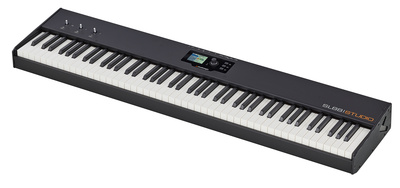
Studiologic SL88 Studio
Customer rating:
(254)

How Does a MIDI Controller Work?

While a velocity-sensitive keyboard is the minimum requirement for basic MIDI controllers, all keys, knobs, and buttons on the MIDI controller can generate data. The MIDI protocol then allows for this data to be digitally transmitted to other devices. You can do this using a MIDI cable, USB MIDI, or Bluetooth MIDI. In this respect, a MIDI controller is no different from other MIDI keyboard instruments such as digital pianos, synthesizers, or keyboards.

Do MIDI Controllers Require Special Software?

You can easily connect modern USB MIDI controller controllers to your computer without installing any additional software. They then function as standard controllers. This means…

  1. You can use the keyboard to play into a sequencer or play a software piano,
  2. You can link the physical controls on the keyboard to the virtual controls in the software using the “MIDI Learn” option.

Manufacturers usually provide free supporting software with the device that offers more options and specific functions. While some programs are optional, others are special versions of software that are required to use all or most of the capabilities of a USB MIDI controller.

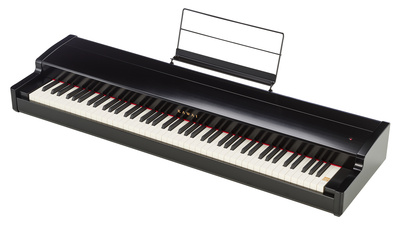
For example, there is an optional software for the Kawai VPC1 piano controller. With this editor software, you can adjust the dynamic behavior and even create your own dynamic curves – a very useful extension that you will want to install.

After installing special software, some MIDI controllers allow you to control DAWs directly, without having to assign parameters manually. The extent of this feature varies by manufacturer and software combination. Some controllers have templates built into their memory, alternatively, DAW manufacturers and even independent developers offer customizations for download. Other manufacturers offer controller scripts for various DAWs, as well as special driver software that needs to be installed on your computer to take full advantage of the potential of your MIDI controller.

Affiliate Links
Kawai VPC1
Kawai VPC1
Customer rating:
(118)

Nektar Panorama T Series and Presonus Studio One

This video about the Nektar Panorama T-Series is a great example of seamless integration between a MIDI controller and a DAW. The DAW shown is Presonus Studio One, but Nektar offers software for all major DAWs.

Nektar Panorama T Series and Presonus Studio One

You are currently viewing a placeholder content from YouTube. To access the actual content, click the button below. Please note that doing so will share data with third-party providers.

More Information

Learn More About MIDI Controllers with Piano Keys

Discussions on Reddit:

Connecting a Piano to a PC
Digital Piano vs MIDI Controller

*Affiliate link. These “advertising links” help us finance our website. If you buy a product through such a link, we receive a small commission – at no extra cost for you. The PIANOO.com team says thank you for your support!

ADVERTISEMENT

Related Articles

20.09.2025 · Buy Yamaha CLP-800 Series – Reviewing Clavinova Digital Pianos

In fall 2024, Yamaha announced the new CLP-800 series. The key refinements concern the sound generation and playback systems.

01.09.2025 · Buy Buyer’s Guide: A Portable Piano Under $2,000

With a scaled-down cabinet and speaker system, a portable piano under $2,000 offers a great keyboard and sound engine.

20.02.2025 · Buy Studiologic SL-mk2 Series – USB MIDI Controllers

The Italian manufacturer has introduced the new models of the Studiologic SL-mk2 series with new features and improved details.

20.02.2025 · Buy Speakers and Piano Sound: How Good Can Digital Pianos Really Sound?

Speakers and piano sound — does your digital piano sound better when you're using headphones? Find out why here.

13.02.2025 · Buy Kawai CN Series: CN-201 & CN-301

With their high-quality playability, the digital pianos in the Kawai CN series inspire both demanding beginners and advanced players.

09.02.2025 · Buy Product Review: Yamaha TransAcoustic Piano - Hybrid Piano

Piano or digital piano? The Yamaha TransAcoustic piano offers the best of both worlds. The perfect blend of acoustic and digital piano.

08.02.2025 · Buy Almost as Good as the Real Thing: Playing a Hybrid Digital Piano

Acoustic soundboard, grand piano action, and wooden keys: A hybrid digital piano combines maximum playing comfort with high-quality sound.

07.02.2025 · Buy Play Piano with Headphones: Hybrid Piano!

Play the piano with headphones - a hybrid piano combines an acoustic piano with a mute function and an electronic sound generation.

15.01.2025 · Buy Best Headphones for Digital Piano: Sound That Inspires

Buying high-quality headphones for digital piano: Why invest in good digital piano headphones and how much do they cost?

13.01.2025 · Buy Kawai ES Series: ES-920, ES520, ES-120, ES-60 – Portable Pianos

The Kawai ES Series is popular with beginners and advanced players alike: High-quality features at prices ranging from $400 to $1,200.

22.12.2024 · Buy Wireless MIDI: Play Piano or Keyboard Without Cables

Wireless MIDI systems are useful when the instruments themselves are not Bluetooth-compatible. But what makes a good Wireless MIDI adapter?

20.12.2024 · Buy Studiologic SL Series: SL73/88 Studio, SL88 Grand, SL|Mixface

The Studiologic SL series offers USB MIDI controllers with high-qualtiy hammer action keyboards for MIDI studio and live use.