ADVERTISEMENT

Piano Duo: Alexandra Sostmann & Michael van Krücker

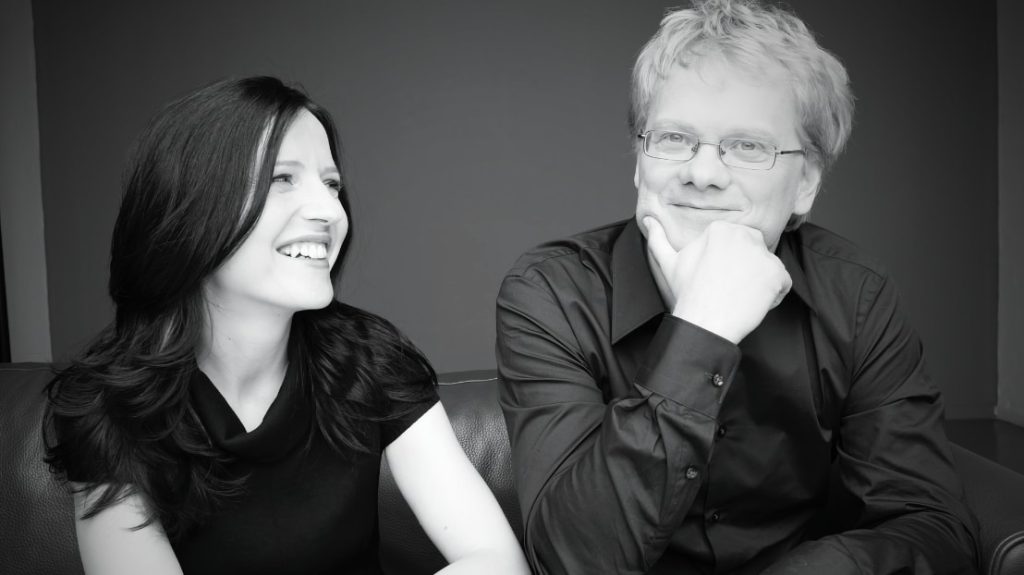
Piano-Duo: Alexandra Sostmann – Michael van Krücker (Photo: Dominik Mentzos)
ADVERTISEMENT

Piano duo—playing four hands on a single piano—is certainly not the easiest form of chamber music. This makes it all the more remarkable to hear a piano duo whose performances convey such effortless ease as those of Alexandra Sostmann and Michael van Krücker.

ADVERTISEMENT
ADVERTISEMENT

While searching for music by Debussy on YouTube, I came across a wonderful recording of Six Épigraphes Antiques performed by the piano duo Alexandra Sostmann and Michael van Krücker. Since Debussy also wrote a solo piano version of this piece, I was a bit confused when I first heard the recording. Initially, it sounded to me as though only one person was playing the piano. Fascinating!

Four Hands – One Piano

Alexandra Sostmann and Michael van Krücker perform as both a two-piano duo and a four-hands-on-one-piano act. Michael van Krücker has explored this format extensively in an earlier piano duo collaboration, which even led to recordings with a symphony orchestra—a rather unusual concert format.

Four-hand piano playing is perhaps the highest or the most demanding form of chamber music.

- Michael van Krücker

Alexandra Sostmann and Michael van Krücker—both trained concert pianists and prizewinners at numerous international piano and chamber music competitions—might seem beyond reproach as performers. But in speaking with them, I realize that it takes more than technical perfection and musicality alone.

I’m curious about how a piano duo achieves such a perfectly balanced sound while still preserving the individual nuances and artistic personalities of both performers. I also admire the effortless ease that Alexandra Sostmann and Michael van Krücker bring to their four-hand and two-piano performances.

Debussy Six Épigraphes Antiques – Sostmann & van Krücker – Piano Duo

You are currently viewing a placeholder content from YouTube. To access the actual content, click the button below. Please note that doing so will share data with third-party providers.

More Information

You both work in a wide variety of settings—as soloists, in chamber music ensembles, in ballet, and in theater productions. How do the demands differ? I imagine you have to make quite different decisions depending on whether you’re performing as a soloist or as part of an ensemble.

Alexandra Sostmann (AS): It varies greatly depending on whether I’m playing chamber music or performing as a soloist. These are two distinct disciplines, each presenting its own unique challenges and demands. When performing on my own, for example, there’s something wonderful about being alone with yourself. But it also brings a certain pressure when you walk onto the stage. You have to stay focused to perform your best and connect with the audience.

That connection is also easier to establish in chamber music. I have the impression that it’s less difficult to communicate with the audience in that setting than when you’re alone on stage. Additionally, the sense of space is completely different when I’m playing in a duo, trio, or quartet than when I’m sitting alone at the piano. I find that when you perform solo, everything is very much centered on the performance itself: captivating the audience through sound and, in the best sense, physical tension.

In a piano duo, for example, that’s easier because you share that tension. And I’d also say it’s more enjoyable because there’s a positive, inspiring energy coming from the other player. When performing solo, that energy has to come entirely from within yourself.

And if you happen to be having a bad day, you just have to deal with it on your own.

AS: That is indeed difficult. But, of course, it’s simply part of the profession, even if it isn’t always enjoyable. I once knew a colleague who, after a concert he considered a failure, actually laughed about what had just happened to him…

An admirable way of dealing with it.

Michael van Krücker (MvK): It really can be a lonely profession when you’re working as a soloist. When we perform as a piano duo, on the other hand, it’s above all a shared joy. We travel to the venue together, spend time together on and off stage, and then go out for a meal after the concert. That really brings us closer together.

As a soloist, you can still tour with company, but I imagine it’s not quite the same, is it?

MvK: You miss the time you spend together on stage. It’s really something completely different.

AS: Definitely. For example, when you’re touring on your own, it just feels completely different. You’re picked up from the hotel in the morning, and on the way to the concert hall, you find yourself thinking, “What a shame, I didn’t get to see anything of the city once again,” or something along those lines.

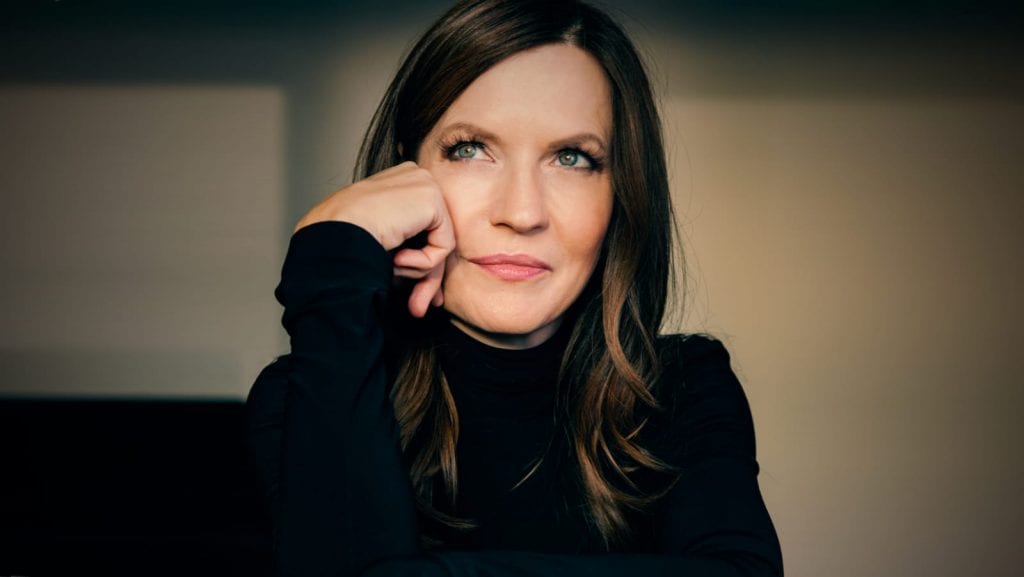
Alexandra Sostmann (Photo: Felix Broede)
…of course, our individual musical ideas also have to be compatible.

- Alexandra Sostmann

Debussy: Six Épigraphes Antiques – Piano Duo

I came across your recording of Debussy’s Six Épigraphes Antiques on YouTube, where you perform as a piano duo. It’s a beautiful recording—where was it made?

AS: That was quite a while ago. It was recorded during a concert near Düsseldorf. We happened to have the recording and thought we’d upload it.

Very nice, I’d love to hear more from you.

MvK: I can assure you, we have quite a few things in the works. We already have recordings for an online presentation, although they still need to be edited. And our first joint CD is also in the works.

I’ve definitely subscribed to your YouTube channel. How did your collaboration as a piano duo actually come about?

AS: We had both previously played in other piano duos that eventually came to an end. So, we both found ourselves back on the market (laughs). Then, by a happy coincidence, we met while serving on the jury of a competition. We immediately realized that we clicked musically and came up with the idea of playing together as a duo quite quickly.

Did you know from the beginning what direction you wanted your collaboration to take?

AS: First, we have to establish a good personal rapport, and I don’t think either of us is the arrogant type. Initially, communication is key because we have to collaborate on the pieces. Of course, our individual musical ideas have to be compatible, too. These are the things that absolutely have to be right.

MvK: In fact, when playing in a piano duo, you know very quickly whether you’re a good match—both personally and musically. If it doesn’t click within that short time, then it probably never will. The fine art of four-hand piano playing lies in achieving complete unity in the ensemble, while everything still has to sound effortless. And that only works if there are no problems on either the personal or the musical level.

AS: I think it’s important to listen to each other and give one another space. That also has to do with respect. After all, each person contributes their own perspective and brings a great deal to the partnership. This must be acknowledged and integrated into our collaborative approach. You don’t always have to agree, but it’s important to remain open to one another. Treating each other with respect and kindness is extremely important in a piano duo, and it’s something I greatly appreciate about Michael.

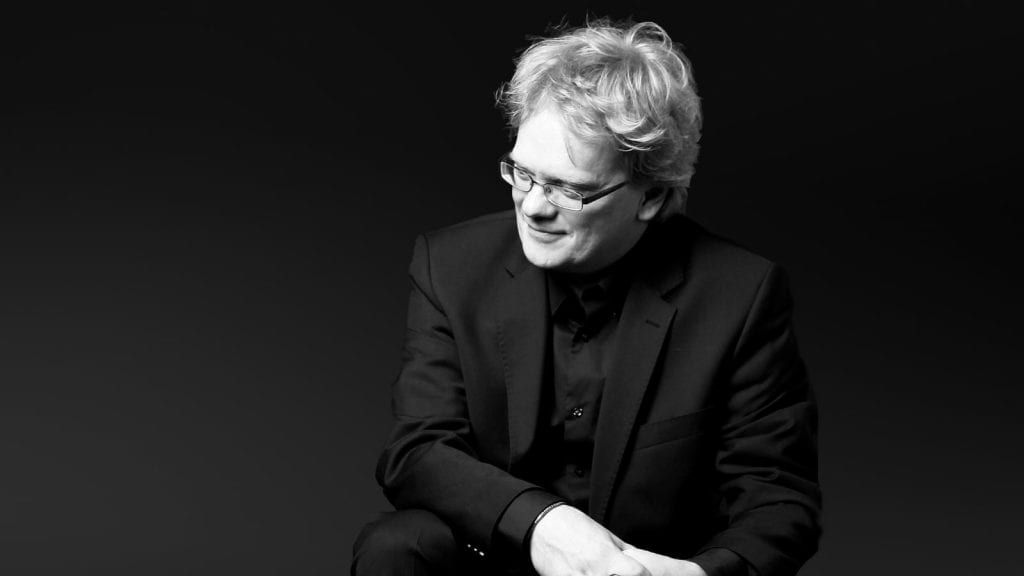
Michael van Krücker – Concert Pianist (Photo: Marsha Glauch)
Michael van Krücker (Photo: Marsha Glauch)

When we talk about the development of sound, I imagine that the two of you are searching together for a particular sonic space. But at the same time, there are these two distinct personalities. At what point does one player become too dominant, and at what point does one disappear into the ensemble? I imagine striking that balance is a very delicate matter.

MvK: First and foremost, you have to put your ego completely aside. Four-hand piano playing is perhaps the highest or the most demanding form of chamber music. You’re sitting right next to each other, striving to make it sound as though a single person were playing with two hands, rather than several hands at once. Homogeneity in ensemble playing, combined with artistic freedom and individuality, is the key.

When I first heard the Debussy piece, I couldn’t believe I was hearing four hands playing. So is that the goal you strive for when performing as a piano duo?

AS: Yes, definitely. If you’re playing in a duo with piano and violin, for example, the string player has the advantage of being able to “glide into” the note. With the piano, however, the note is there immediately. In that sense, in a piano duo you have to be able to sense the other person, you have to feel each other’s breathing internally. It simply has to be right.

This might be a silly question, but how do you coordinate the pedals in a piano duo?

MvK: We coordinate that between us. For example, when Alexandra plays a solo passage, she usually takes over the pedal. And in the sections where we return to playing four hands, I do my best to achieve a balanced overall sound that we’re both happy with.

AS: If you’re not the one using the pedal, then you must be able to trust the other person. At the same time, you have to let go of the idea that you need to operate the pedal yourself to achieve the desired tone. That takes some getting used to.

I’d imagine that the pedal part is actually dictated by the score. But I suspect it’s not quite that simple.

AS: Yes, exactly (laughs). It’s a bit more complicated.

MvK: But we both bring a lot of experience to the table here. And when we sit down at the piano together, we already know each other’s ideas and preferences.

Sostmann & Krücker – Piano Duo: Repertoire

As a duo, you cover a broad musical spectrum—your website mentions minimalism, Impressionism, and Tango Nuevo. Does the latter presumably refer to the music of Astor Piazzolla?

AS: Not only that. Piazzolla is certainly the most famous, but there are other Argentine tango composers as well.

When you say “minimalism,” are you referring more to Erik Satie or to minimalist composers like Steve Reich, for example?

MvK: Absolutely. But also Morton Feldman, Philip Glass, Arvo Pärt—that sort of thing.

AS: But those are just three names that represent what we love about minimalism. Our repertoire is broader, and we’re constantly expanding it in this area.

You have to take a step back and set out in search of the sound.

- Alexandra Sostmann

When you’re exploring new repertoire, surely there’s also discussion about musical ideas?

AS: Absolutely, without a doubt. You ask yourself what a composer might have envisioned, or what the other thinks and feels about that. You can also discuss musical “colors,” and so on.

Do you also mentally transport yourself back to the era in which a piece was composed?

AS: Yes, I think it’s very important to do research in order to put yourself in a composer’s emotional world. Take Debussy’s Six Épigraphes Antiques, for example: It was a time of upheaval, of a new world, people were discovering many new things, and Debussy was a man of diverse interests. You have to know things like that.

That’s certainly helpful for capturing the music’s expression, though your own perspective from the present day will inevitably come into play as well. And then, the question remains: What of that actually resonates with the audience?

MvK: When we perform our concerts, we also provide some verbal commentary to give the audience context about the historical period and the music. It doesn’t have to be very long. The goal is simply to give the audience a rough idea of what to expect.

AS: Especially when you’re performing a contemporary program, older members of the audience can sometimes struggle with it. Providing them with a little guidance helps enormously.

Do you go out to meet the audience as they’re leaving the hall after the concert?

MvK: Unless they’ve already left the hall by then (laughs). Joking aside: Yes, we love to, and we don’t shy away from personal contact either.

AS: I think it’s a lovely moment, especially when we get to sign CDs afterward. You strike up conversations, because people aren’t shy about asking questions then. Having that direct exchange is really nice and interesting.

Is the duo purely a concert project, or are recordings and releases also planned?

AS: There will definitely be more recordings. We are resolved to do so.

I’m really looking forward to that. Thank you very much for the great conversation.

More Information

Official Website: www.sostmannvankruecker.de

Alexandra Sostmann

Website
Apple Music
Spotify

Michael van Krücker

Website
Apple Music
Spotify

ADVERTISEMENT

Related Articles

01.11.2026 · Buy Yamaha Digital Piano: The Best Models Reviewed

With a Yamaha digital piano, you get a lot of performance for your money. The latest releases: Entry-level models Yamaha P-145 and P-225.

26.10.2026 · Buy Gifts for Musicians: Is a Piano the Only Option?

It doesn't have to be a grand piano—there are plenty of small and inexpensive gifts for musicians to choose from.

20.09.2025 · Buy Yamaha CLP-800 Series – Reviewing Clavinova Digital Pianos

In fall 2024, Yamaha announced the new CLP-800 series. The key refinements concern the sound generation and playback systems.

01.09.2025 · Buy Buyer’s Guide: A Portable Piano Under $2,000

With a scaled-down cabinet and speaker system, a portable piano under $2,000 offers a great keyboard and sound engine.

20.02.2025 · Buy Studiologic SL-mk2 Series – USB MIDI Controllers

The Italian manufacturer has introduced the new models of the Studiologic SL-mk2 series with new features and improved details.

20.02.2025 · Buy Speakers and Piano Sound: How Good Can Digital Pianos Really Sound?

Speakers and piano sound — does your digital piano sound better when you're using headphones? Find out why here.

13.02.2025 · Buy Kawai CN Series: CN-201 & CN-301

With their high-quality playability, the digital pianos in the Kawai CN series inspire both demanding beginners and advanced players.

09.02.2025 · Buy Product Review: Yamaha TransAcoustic Piano - Hybrid Piano

Piano or digital piano? The Yamaha TransAcoustic piano offers the best of both worlds. The perfect blend of acoustic and digital piano.

08.02.2025 · Buy Almost as Good as the Real Thing: Playing a Hybrid Digital Piano

Acoustic soundboard, grand piano action, and wooden keys: A hybrid digital piano combines maximum playing comfort with high-quality sound.

07.02.2025 · Buy Play Piano with Headphones: Hybrid Piano!

Play the piano with headphones - a hybrid piano combines an acoustic piano with a mute function and an electronic sound generation.

15.01.2025 · Buy Best Headphones for Digital Piano: Sound That Inspires

Buying high-quality headphones for digital piano: Why invest in good digital piano headphones and how much do they cost?

13.01.2025 · Buy Kawai ES Series: ES-920, ES520, ES-120, ES-60 – Portable Pianos

The Kawai ES Series is popular with beginners and advanced players alike: High-quality features at prices ranging from $400 to $1,200.