Michael van Krücker

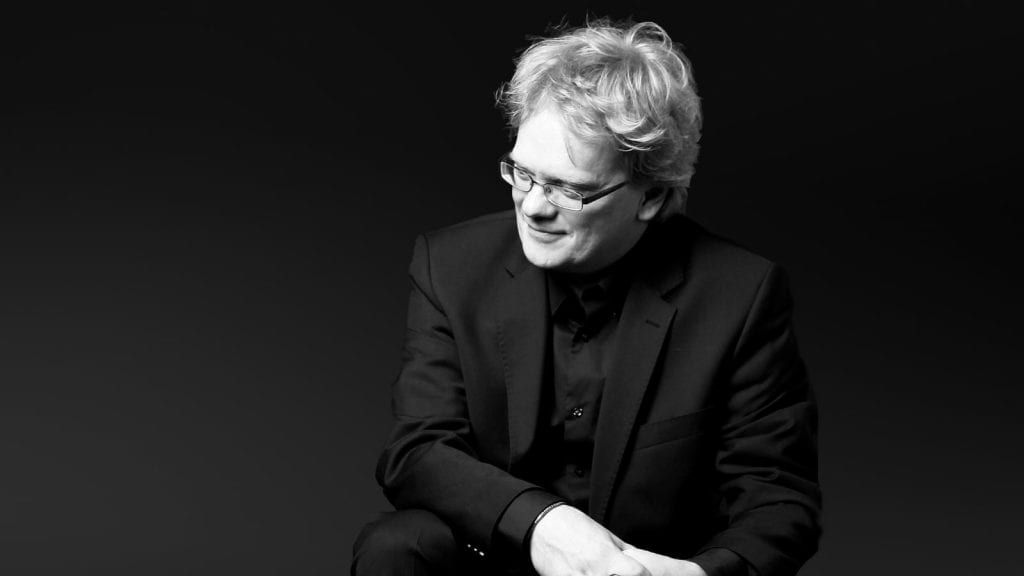
Michael van Krücker – Concert Pianist (Photo: Marsha Glauch)
Michael van Krücker (Photo: Marsha Glauch)
ADVERTISEMENT

From classical music to minimalism, Michael van Krücker’s career as a concert pianist spans a wide range of genres. His solo and chamber music performances and recordings are highly regarded, he runs his own piano studio, composes, and edits piano works. Among other things, his artistic work is primarily devoted to Romantic piano music, with a particular focus on the lesser-known composers of the era.

ADVERTISEMENT
ADVERTISEMENT

Numerous recordings document his meticulous work in this field. These include the piano music of Ignaz Moscheles (1794–1870), Alexander Dreyschock (1818–1869), Friedrich Kalkbrenner (1785–1849), as well as the complete piano works of Friedrich Nietzsche (1844–1900). Michael van Krücker has unearthed many treasures of piano music, which he brings to life today with his remarkably colorful and multifaceted playing.

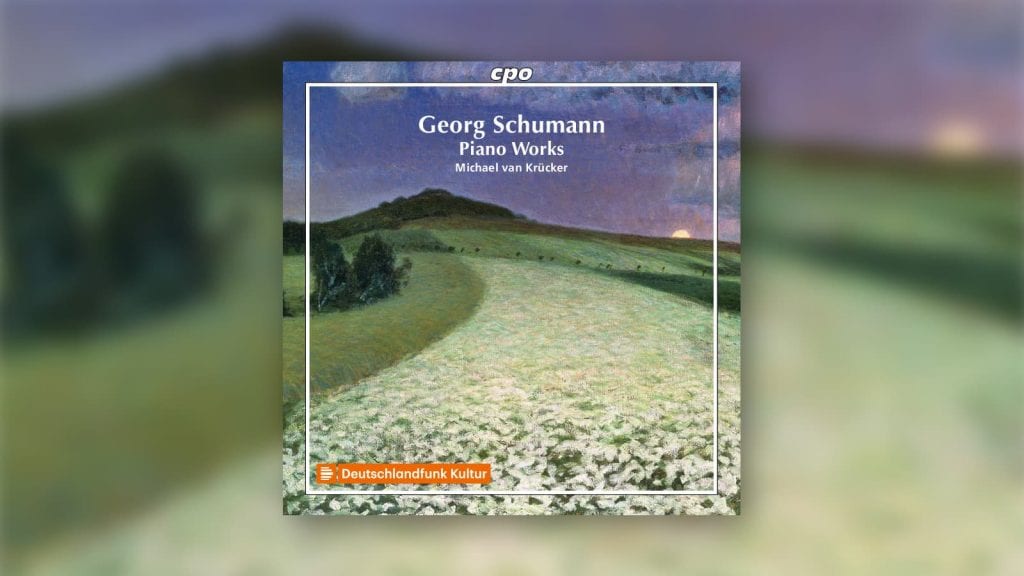
Michael van Krücker’s album Georg Schumann Piano Works has just been released. It features brilliant performances of beautiful romantic piano music with modern overtones. The emotional depth of these recordings really resonates with me: Michael van Krücker is a pleasure to listen to.

As I am no classical music expert, I was quite nervous before my interview with him. However, my anxiety quickly vanished when I spoke with Mr. van Krücker on the phone, as he greeted me extremely warmly and immediately surprised me with his curiosity about new technology in the field of digital instruments. In a friendly and humorous manner, he gladly provided detailed insights into his work and creative process.

I Don’t Like the Piano, But I Like This…

I found a compilation CD titled after this saying (original: Ich mag kein Klavier, aber das gefällt mir!) on which you’re featured playing a true piano classic, Für Elise by Beethoven. What does playing the piano mean to you?

MvK: I think I need to back up a bit. My interest in piano music didn’t really take hold until relatively late, but it’s been all the more intense for it.

What do you mean by “late”?

MvK: I started when I was about 15. I’m not at all sad that I didn’t start at a very young age. I don’t think that has to be a disadvantage in any way. By that age, after just six months, you already know whether playing the piano might not have been the right decision after all. Or you tell yourself: “Now more than ever!” I chose the latter and took a pretty relaxed approach.

In general, what would the difference be?

MvK: As a child, I think you approach it very intuitively at first, and the intellectual processing comes later. If you start later in life, then reason takes precedence at first, and you have to actively look for the intuitive aspect. This way, you approach it from two sides. As for the compilation, I didn’t know I was on it until recently. I happened to come across the CD by chance because I thought the title was funny. And I was very surprised to find my name in the CD booklet.

In a review of you, your “refined piano playing and poetic musicianship” are praised…

MvK: …well, I didn’t bribe the critic… (grinning)

What is poetry in music?

MvK: How should I describe that? Is it the romantic exploration of states of mind? I love the era of the turn-of-the-century pianists, the transition from the 19th to the 20th century, when the first recordings were made. And I believe that the pianists around the turn of the century were closer to the composers. Some of them even knew each other personally.

An Interview with Michael van Krücker on Georg Schumann

You are currently viewing a placeholder content from YouTube. To access the actual content, click the button below. Please note that doing so will share data with third-party providers.

More Information

You are deeply engaged with Romantic piano music, devoting your work in particular to lesser-known composers such as Georg Schumann.

MvK: Yes, I could describe myself as someone who likes to venture down less-traveled paths. In addition to Georg Schumann, I’ve also made solo recordings of works by Friedrich Nietzsche, Ignaz Moscheles, Friedrich Kalkbrenner, and Alexander Dreyschock. Among other projects, I recorded three CDs of piano-and-orchestra concerto pieces for four hands, which were world premiere recordings, with my former piano duo in Cologne*. These include, for example, compositions by Franz-Joseph Fröhlich (1780–1862), Carl Czerny (1791–1857), Leopold Kozeluh (1747–1818), Albrecht Rosenstengel (1912–1995), and Malcolm Arnold (1921–2006), who became famous for the The River Kwai March.

*Michael van Krücker currently performs in a piano duo with Alexandra Sostmann.

…many of these names are completely new to me.…

MvK: Unfortunately, some of these composers’ names have fallen into obscurity. But you’ll find it’s an incredibly fascinating field. I still have a few gems tucked away in my collection.

You just emphasized that: four hands on one piano with an orchestra—what’s so special about that?

MvK: Usually, you find concertos for two pianos and orchestra. Four hands on one piano with an orchestra is very, very rare. In total, we’ve recorded eight works with the Cologne Radio Orchestra and the Bamberg Symphony Orchestra.

Michael van Krücker's latest album, Piano Works, is a tribute to the Romantic piano music of Georg Schumann.

Michael van Krücker: Georg Schumann Piano Works

Your album featuring compositions by Georg Schumann has just been released. His was another name that I was completely unfamiliar with. How did you discover his music?

MvK: Until a few years ago, I wasn’t aware of Georg Schumann’s catalog of works either. The opportunity arose after a concert with Dutch cellist René Berman at the Friedenauer Chamber Concerts in Berlin, when someone mentioned the composer Georg Schumann to me. I was immediately interested. We met again the following day, and that’s how I got hold of some sheet music.

How do you approach material that’s completely unfamiliar to you?

MvK: I just play a few measures without delving too deeply right away, just to see how the music affects me. I then played through all of Georg Schumann’s piano works, and his music immediately captivated me personally. The next step was selecting the right music for a specific program.

I think the compilation makes a statement, if you can call it that. Even if you listen to the pieces outside the context of the album’s order, everything is connected.

MvK: That’s always very important to me. For example, I didn’t include the études and variations because they wouldn’t have fit as an internal unit, in my opinion.

It seems to me that the unifying element is also provided by the underlying Romantic mood. The first piece, Im Frühling, ein Rückblick (A Retrospective in Spring), even expresses this in its title. The music has a power that is both mental and evocative. One looks back and can sense the longing for the past season, which, however, can be symbolic of life itself.

MvK: I can fully agree with all of that, and I must also say that I feel very much at home in Romantic music. But I also feel very comfortable with Classical music, and of course with Impressionism and composers like Debussy, Ravel, and Fauré. Nor do I want to overlook my appreciation for contemporary music, such as that of Arvo Pärt. As I said, though, I’m not limited to any one style. I just have to hear a few measures or chords to know whether it works. I don’t approach it intellectually at all. Instead, I sense it intuitively in the blink of an eye. Imagine it as if you were looking at a painting. You’d then say quite spontaneously, “Oh, what a wonderful painting!”—or “For heaven’s sake!” (laughs).

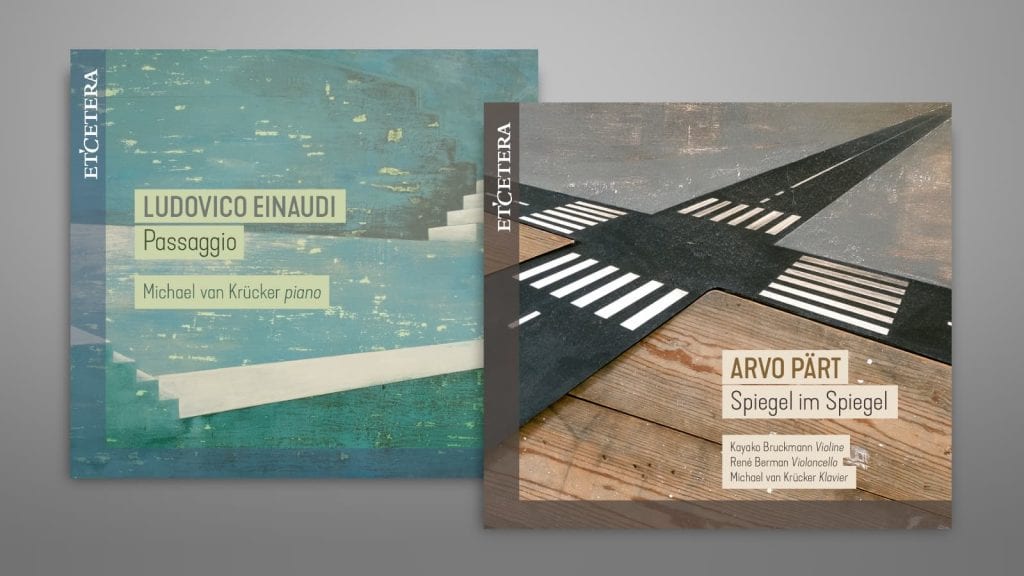
Michael van Krücker's latest CD releases also feature music by contemporary composers.
When I record a CD, I need to feel confident that I can live with the final product.

You do deal with things that might seem less accessible at first, but it’s definitely different. There’s still a distance…

MvK: When I record a CD, I need to feel confident that I can live with the final product. I think this is extremely important, especially when recording something. Many years later, I should still be okay with it when I listen to it again. Once it’s recorded, you can’t take it back. A concert is a snapshot in time, but a CD can be played over and over again.

Modern and inspired by chamber music: Arvo Pärt – Spiegel im Spiegel (Mirror in the Mirror)

You are currently viewing a placeholder content from YouTube. To access the actual content, click the button below. Please note that doing so will share data with third-party providers.

More Information

Romanticism, Modernism, and Soundscapes

The Georg Schumann compositions on your album must have been written at a time when music had already clearly begun to move toward modernism.

MvK: That’s right. Georg Schumann composed these pieces between 1866 and 1904. Of course, a great deal was created during that period. For example, in the 1890s there was Vexations (“torments”) by Erik Satie (1866–1925). This piece consists of a theme with two variations that must be repeated 840 times. It is considered one of the longest pieces in music history and arguably the first precursor to twelve-tone music, leading through the serial music of the 1950s all the way to the attempt to artistically harness and experience boredom. The monotonous repetitions here come remarkably close to silence.

So, something like this already existed, but Georg Schumann was far removed from it. This never seemed to interest him much. At the very least, he always remained very true to his own style, and even the titles of his poetic piano music take us back to a long-forgotten time: Barcarolle, Am Morgen, Am Abend, Im Frühling, Rückblick, Erinnerungen (Barcarolle, In the Morning, In the Evening, In Spring, Retrospective, Memories).

Even though Georg Schumann clearly remains within the Romantic musical language here, modern elements and echoes keep shining through.

MvK: Yes, that’s true. However, there are no harsh dissonances. His works always have a clear structure, which makes the music entertaining and never boring, in the best sense of the word. That’s why I enjoyed recording this album so much.

One piece in particular caught my attention: Am Abend im Dom (Evening in the Cathedral). It creates very strong soundscapes.

MvK: While recording this piece, our team had a lengthy discussion about it. My musical vision was of a situation where I was alone in the cathedral…

I jotted down a note on the spot while listening to the piece—may I read it aloud?

MvK: Of course.

Is it actually possible to play any quieter than this?!? It’s played just as one would behave in a church. It’s quiet, and you can feel the space without a single sound being uttered.

MvK: Well, then my vision came across well (smiles).

In terms of the voice leading, the piece seems as straightforward as a chorale…

MvK: Yes, that was exactly my intention. I really wanted to play it very slowly and maintain that tempo. It was meant to express a stillness that I would feel if I were sitting alone in the cathedral. My place would be in the center, surrounded by tranquility. The moonlight would shimmer, and perhaps a sound would be audible from afar.

Silence is also an important element in music.

…and yet, the sound of the space constantly shines through—I find that remarkable.

MvK: For many, this piece is a huge challenge because of the silence and the slow tempo. But I believe that if you can endure and sustain this state, you’ve already made significant progress inwardly. If you can’t, then you’re still trapped in the external world.

You have to be able to open yourself up to it. Some people can’t stand silence or open spaces very well, while others can’t tolerate confined spaces or hustle and bustle…

MvK: Personally, I love silence. And there’s definitely something spiritual about this piece. Silence is also an important element in music, and I’m a big fan of pauses. If a pause isn’t held properly, a piece of music loses a great deal of its impact. The “breathing” of a pause is extremely important.

What’s often missing in life today is inner peace. Perhaps that’s a symptom of our hectic, digital age. When you listen to older recordings, you can sense that inner peace, that freedom of sound. I value that greatly.

Michael van Krücker on Sounds and Colors

On your website, we learn that you are a synesthete and experience music as a connection between sounds and colors. How did you become aware of this?

MvK: It was a funny situation. For me, composers and sounds have specific colors. I didn’t realize this until I went to a concert. During the intermission, I told a friend that I’d always imagined Brahms exactly like that: greenish! A little brighter at the top and a little more subdued at the bottom. She gave me a very puzzled look (laughs) and replied that what I was saying was all a bit strange. Up until that point, I was firmly convinced that everyone perceived music this way. So, I was quite surprised to learn that this isn’t actually the case.

Could you give an example of how this additional level of perception influences your work?

MvK: Oh yes, actually: the preparations for recording the Schumann CD. I had several grand pianos to choose from, and I played them for about two hours, comparing which one matched Georg Schumann’s tonal color. It’s something I can’t control, it just happens spontaneously as soon as I hear sounds or music.

Would you say that this perception can also be a hindrance when making music?

MvK: Not really, since, as I said, it’s completely normal for me. It’s actually helpful when I’m teaching, for example. It allows me to describe many things in terms of colors.

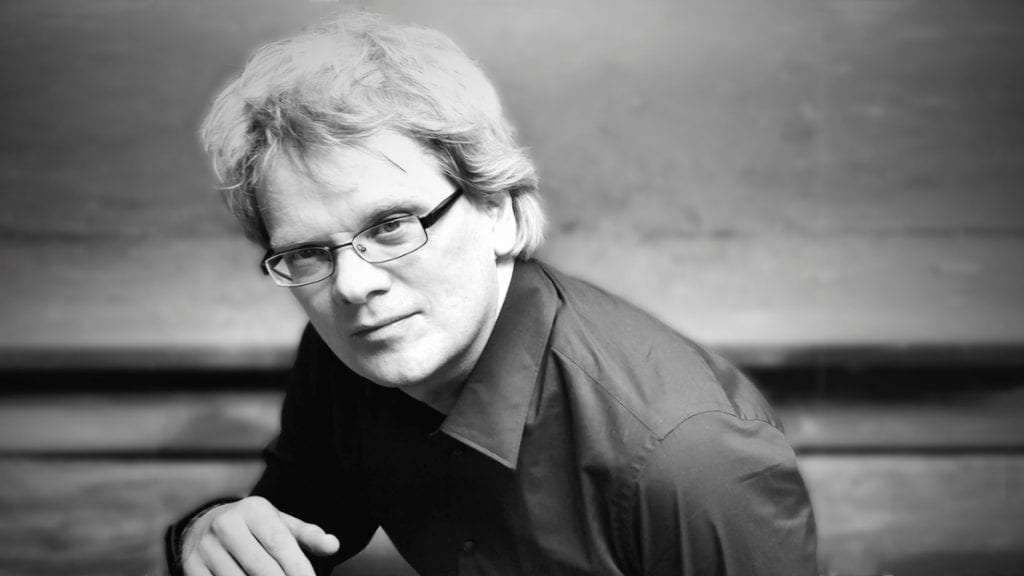
Michael van Krücker (Photo: Marsha Glauch)
(Photo: Marsha Glauch)

Michael van Krücker: “Piano am Park” Piano Studio

You’ve brought up another important topic: In addition to your work as a concert pianist, you also run your own piano studio, “Piano am Park,” in Krefeld. Are you still giving lessons even during the pandemic?

MvK: Yes, I do that online—I use Skype, WhatsApp, or FaceTime, which work quite well even with an iPhone and iPad.

Thankfully, it’s relatively easy from a technical standpoint. But it is still limiting, isn’t it?

MvK: Well, I’ve known the students I teach online for quite some time now. And they’re pretty good at applying the tips I give them.

According to your website, you offer piano lessons, workshops, chamber music, and college preparation. Do you also accept students who are beginners at the piano?

MvK: It really varies. Some are preparing for college, some come to me from college, but I also teach beginners. However, it’s important to me that the students want to learn on their own initiative. I find it more difficult when parents put pressure on them.

It’s certainly different when you have to motivate someone to learn versus when it comes naturally…

MvK: Yes, that’s for sure. The youngest student at my music school is seven years old. After just half a year, he’s already worked his way through four piano method books. He’s doing it entirely on his own initiative. Sometimes I actually feel like I have to slow him down a bit (amused). Generally speaking, it comes down to me noticing that someone has the curiosity to learn something new. But as I said, it varies widely: The youngest is seven, and the oldest student is over 80. If the interest and willingness are there, if someone really wants to learn, then it’s not a problem at all.

Other than that, I currently have a few students who are preparing for the entrance exam to study music. I explain what they can expect and what they need to know. We go over theory, ear training, and so on. I also put together a program of about 15–20 minutes with the students. We always do this together, since I contribute various program ideas. So if it’s going to be a Haydn sonata, I first suggest several sonatas for them to get to know. Just imagine a student playing something while actually wondering why they’re supposed to play it. That just can’t work.

That, too, must certainly come from within oneself, so that the necessary depth can develop…

MvK: That’s very important to me.

During an entrance exam, isn’t it also ultimately critical to play something you’re truly convinced of and perform it with complete dedication?

MvK: For my part, I prefer to take an open and flexible approach to program, so that the inner freedom to make music is guaranteed.

We’ve just been talking about your perception of sound, and then about teaching. Besides the traditional acoustic piano, the digital piano is a reality for many people. How do you perceive the sound of digital instruments? Is it immediately dismissed as sounding cold or like a simulation?

MvK: Well, I approach this completely without bias, because I generally enjoy listening to everything. At first, I’m not at all concerned with how it was created from a technical standpoint or what possibilities it offers. I want to be moved by it first, so that I can say, “This is music, and it comes across.” If that’s the case, then a lot has already been achieved.

Finally, there’s the question of practicing and learning. How do you approach that?

MvK: I’ve gotten into the habit of thinking of my time at the instrument as if I were entering a secluded, quiet, and beautiful place. And then I’m happy that I get to be completely alone with myself. The word “practice” has somewhat negative connotations for me, since it sounds so much like work. And after all, it’s called playing the piano, not working the piano. And since you are, after all, playing, it has to sound—and be—playful.

Do you have specific routines that you use to structure your practice sessions?

MvK: I start with a few specific exercises. But don’t imagine that I start exactly at 8:00 a.m. and finish at 8:15 a.m.—that’s not me. The schedule is flexible because sometimes I just sit down and play. I tend to decide based on my gut feeling.

So, the focus is more on making music and playing itself than on practicing specific runs and scales?

MvK: It depends on what level you’re at right now. In most pieces, such as Haydn or Mozart sonatas, there are plenty of runs you can play at a comfortable tempo and use, so to speak, as “practice scales.” But yes—of course, it’s always beneficial to study something in advance.

What advice would you give to beginners and aspiring concert pianists?

MvK: Joy! Above all, it’s important to find joy in playing the piano. Something I always love to say to everyone, whether they’re just starting out or are already advanced: Playing the piano is like climbing a mountain. The air gets thinner, but the view becomes more beautiful and expansive. However, it’s also very important to look back. Because no matter how far away the goal may still seem, it’s always important to recognize and remind yourself of how far you’ve already come.

Mr. van Krücker, thank you very much for the interview.

Further Information

For a comprehensive source of information about Michael van Kruijk’s work, visit the YouTube channel “MvK”

Click here to visit the official website
“Piano am Park” Piano Studio
MvK on Apple Music
MvK on Spotify

ADVERTISEMENT

Related Articles

01.11.2026 · Buy Yamaha Digital Piano: The Best Models Reviewed

With a Yamaha digital piano, you get a lot of performance for your money. The latest releases: Entry-level models Yamaha P-145 and P-225.

26.10.2026 · Buy Gifts for Musicians: Is a Piano the Only Option?

It doesn't have to be a grand piano—there are plenty of small and inexpensive gifts for musicians to choose from.

20.09.2025 · Buy Yamaha CLP-800 Series – Reviewing Clavinova Digital Pianos

In fall 2024, Yamaha announced the new CLP-800 series. The key refinements concern the sound generation and playback systems.

01.09.2025 · Buy Buyer’s Guide: A Portable Piano Under $2,000

With a scaled-down cabinet and speaker system, a portable piano under $2,000 offers a great keyboard and sound engine.

20.02.2025 · Buy Studiologic SL-mk2 Series – USB MIDI Controllers

The Italian manufacturer has introduced the new models of the Studiologic SL-mk2 series with new features and improved details.

20.02.2025 · Buy Speakers and Piano Sound: How Good Can Digital Pianos Really Sound?

Speakers and piano sound — does your digital piano sound better when you're using headphones? Find out why here.

13.02.2025 · Buy Kawai CN Series: CN-201 & CN-301

With their high-quality playability, the digital pianos in the Kawai CN series inspire both demanding beginners and advanced players.

09.02.2025 · Buy Product Review: Yamaha TransAcoustic Piano - Hybrid Piano

Piano or digital piano? The Yamaha TransAcoustic piano offers the best of both worlds. The perfect blend of acoustic and digital piano.

08.02.2025 · Buy Almost as Good as the Real Thing: Playing a Hybrid Digital Piano

Acoustic soundboard, grand piano action, and wooden keys: A hybrid digital piano combines maximum playing comfort with high-quality sound.

07.02.2025 · Buy Play Piano with Headphones: Hybrid Piano!

Play the piano with headphones - a hybrid piano combines an acoustic piano with a mute function and an electronic sound generation.

15.01.2025 · Buy Best Headphones for Digital Piano: Sound That Inspires

Buying high-quality headphones for digital piano: Why invest in good digital piano headphones and how much do they cost?

13.01.2025 · Buy Kawai ES Series: ES-920, ES520, ES-120, ES-60 – Portable Pianos

The Kawai ES Series is popular with beginners and advanced players alike: High-quality features at prices ranging from $400 to $1,200.