ADVERTISEMENT

Buying a Digital Piano Pedal: Sustain Pedals for Digital Pianos

  • Universal pedals are often significantly cheaper than original accessories – but you need to look closely here.
  • When buying a digital piano pedal, be mindful that the pedal and the instrument are compatible.
  • Digital piano pedals vary in the type of switch, and some are even designed as dynamic controllers – necessary for functions such as damper noise and half pedal.
Digital Piano Pedal
(Photo: Jörg Sunderkötter)
ADVERTISEMENT

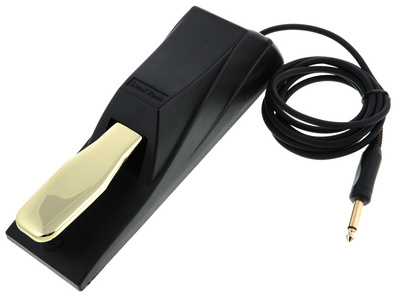
Every piano has three pedals: soft, sostenuto, and sustain – what else is there to know? Quite a lot actually! Especially if you want to buy a digital piano pedal as an accessory. Sustain pedals in particular vary greatly in price.

ADVERTISEMENT
ADVERTISEMENT
Piano pedals vary in design and polarity.

Unlike it is the case with acoustic or grand pianos, the mechanical pedal action of a digital piano is electronically converted into sound. On the one hand, this offers a wide range of possibilities that vary depending on the price range of the instrument.

On the other hand, there are some differences to keep in mind, especially when buying external digital piano pedals as accessories. To be on the safe side, rely on original accessories. Universal accessories are often much cheaper – but you have to choose carefully here.

A triple digital piano pedal is standard, but …

Home pianos typically have three pedals that perform the basic functions listed above. However, you can assign different functions to some pedals using the piano controls. Examples include controlling effects or turning pages of digital sheet music when playing with a tablet. For portable pianos, stage pianos, or master keyboards with a piano keyboard, however, you need to know exactly which pedal type is appropriate.

Why buy a digital piano pedal as an accessory?

Digital pianos usually come equipped with pedals. However, cheaper models often do not include a real pedal but a simple foot switch. This is better than no pedal at all but it creates a different playing experience. For example, these little buttons slip away easily, squeak at times, and all in all can’t provide the pedal feel of a piano.

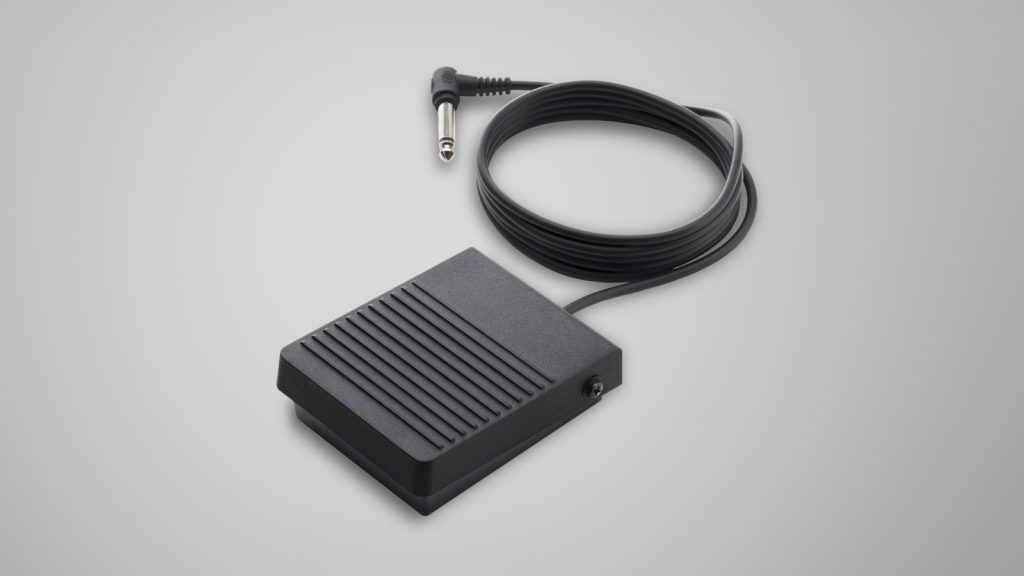
Korg PC-3 sustain pedal as a simple switch (Image Source: Korg)
Inexpensive portable pianos often come with these simple sustain pedals. While they fulfill their main function, they cannot provide the feel of a piano pedal. Half-pedaling is not possible. (Image Source: Korg)

Piano pedals vary in design and polarity and come as a simple switch or a continuous controller. What does all that mean? While it’s not that difficult, as so often the devil is in the details here.

Digital piano pedal: single or triple?

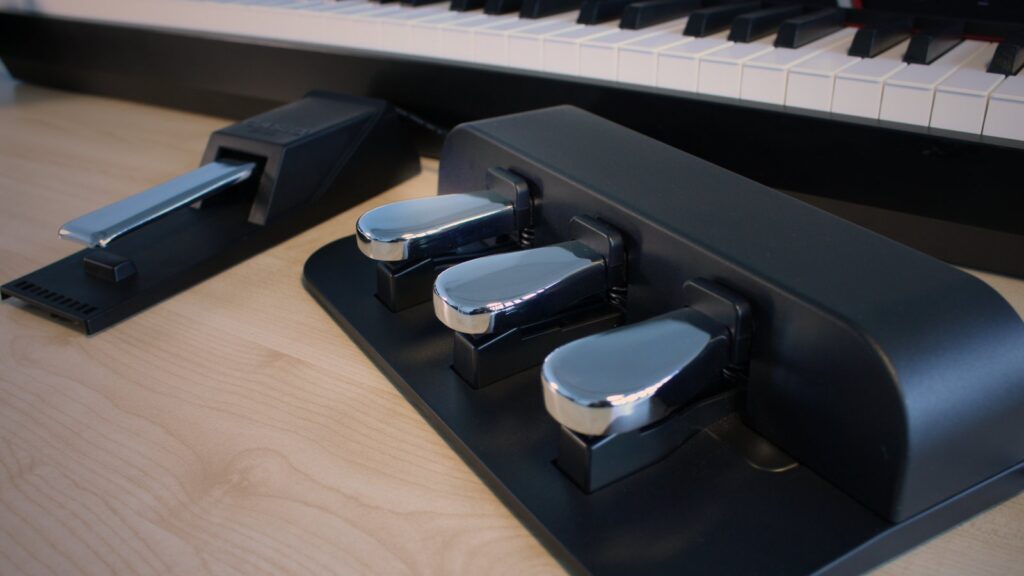
Portable instruments usually come with a single sustain pedal. This is the minimum configuration and sufficient for the time being. However, if you want to play with three pedals and have more expressive possibilities, you need to invest in an upgrade. Of course, it makes little sense to buy three single pedals. There are double pedals and triple pedals – again, there are many differences.

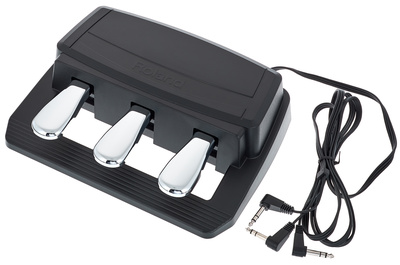
Triple pedal with universal connector

Whether or not a multi-pedal will fit depends on the connector – universal pedals have jack plugs at the ends of their cables. As shown here with the Roland RPU-3, all three pedals are designed as continuous controllers and are therefore half-pedal capable.

Affiliate Links
Roland RPU-3
Roland RPU-3
Customer rating:
(76)

Sustain pedals with special connector

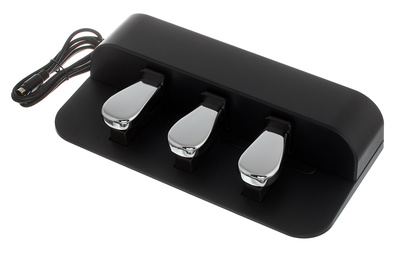
Original accessories often have special multi-pin connectors that do not fit other manufacturers’ instruments. An example of this is the Casio triple pedal unit. Although you can use the SP-34 with various Casio digital pianos, the special connector does not allow use with other brands.

Affiliate Links
Casio SP-34 Sustain Pedal Unit
Customer rating:
(68)

Sustain Pedals: Look for the half-pedal function!

It is definitely a good thing if the sustain pedal on your new digital piano looks like a piano pedal. However, this does not necessarily mean it has the same expressive capabilities. A half-pedal function is important to control the pedal effect just as you would on an acoustic piano. This is already standard on mid-range instruments costing 1,000 Euros or more.

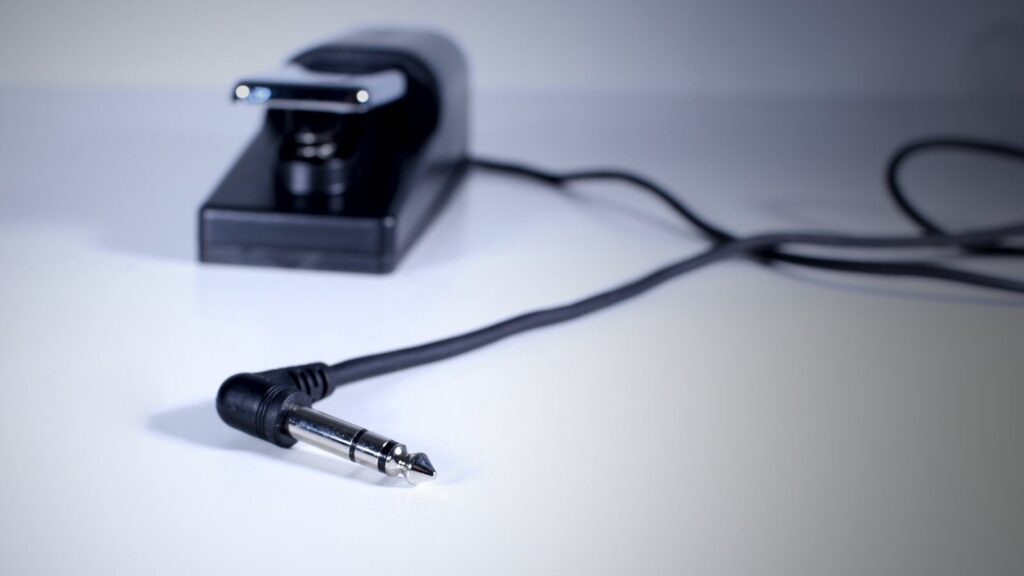
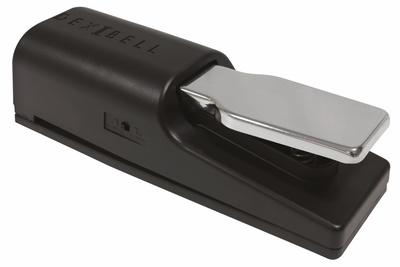
A half-pedal capable sustain pedal (here a Dexibell DX CP-1) is identified by the jack plug. (Photo: Jörg Sunderkötter)

Cheaper digital pianos may support a half-pedal function. However, sometimes they come with a simple pedal that cannot carry out this function. While is not a problem for absolute beginners, you should buy a better sustain pedal when starting to play more demanding piano literature – if the existing pedal connector allows for this.

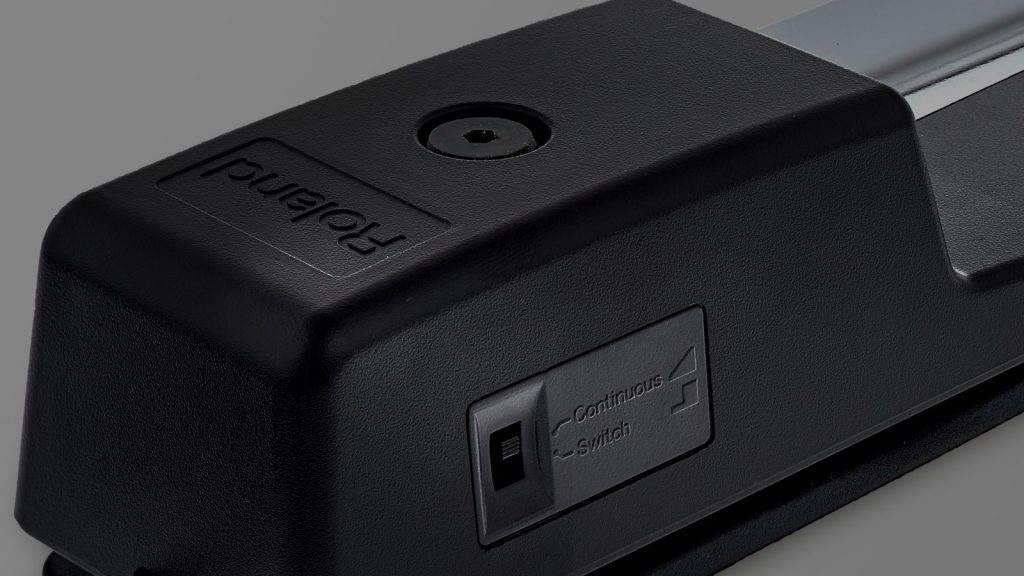
Roland DP-10 with Continuous/Switch option
Customizable: The Roland DP-10 offers switching between Continuous (for half-pedal) and Switch (on/off).

Sustain pedals with half-pedal function – Recommendations

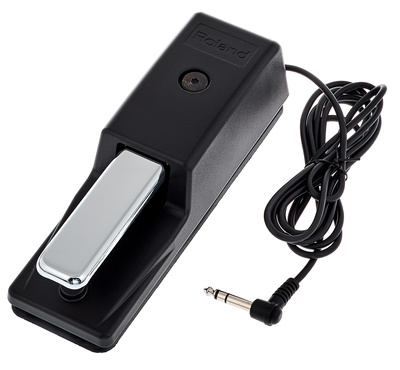
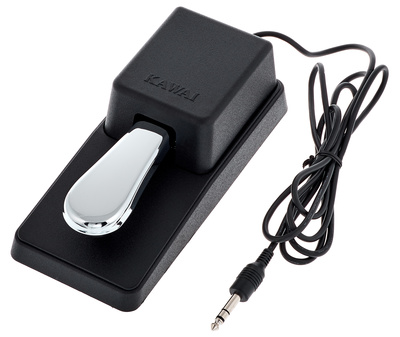
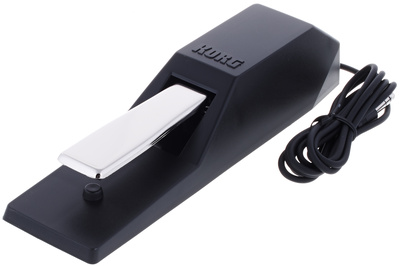
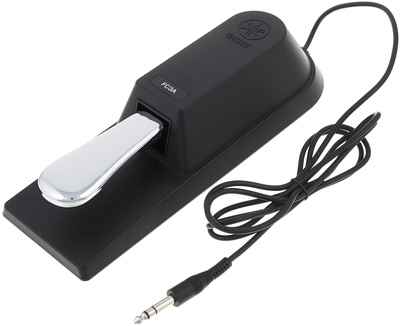
The following pedals have a half-pedal function – recognizable by the “stereo jack plug”. Some pedals have rubber plates you can fold out to prevent the pedal from slipping.

Pedals supporting the half-pedal function at Thomann*

Affiliate Links
Roland DP-10
Roland DP-10
Customer rating:
(768)
Kawai F-10 H Footswitch
Customer rating:
(13)
Korg DS1 H
Korg DS1 H
Customer rating:
(210)
Yamaha FC 3A
Yamaha FC 3A
Customer rating:
(130)
Dexibell DX CP1
Dexibell DX CP1
Customer rating:
(11)

If you are not sure which type of switch your digital piano supports, you should purchase a sustain pedal with switchable polarity. Some of these pedals can also be put into switch mode, which is useful in the (rare) case that a digital piano does not support the half-pedal function.

Pedals with switchable polarity at Thomann*

Affiliate Links
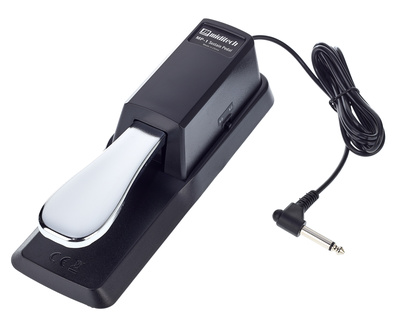
Miditech MP-1
Miditech MP-1
Customer rating:
(217)
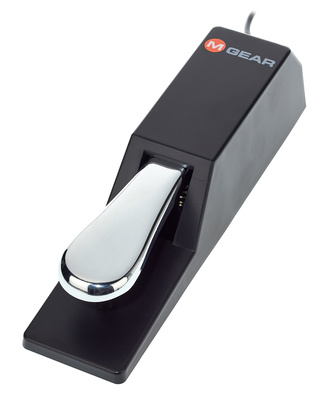
M-Audio SP-2
M-Audio SP-2
Customer rating:
(2678)
Lead Foot LFD-2
Lead Foot LFD-2
Customer rating:
(1459)

Sustain Pedal as a switch: Paying attention to polarity

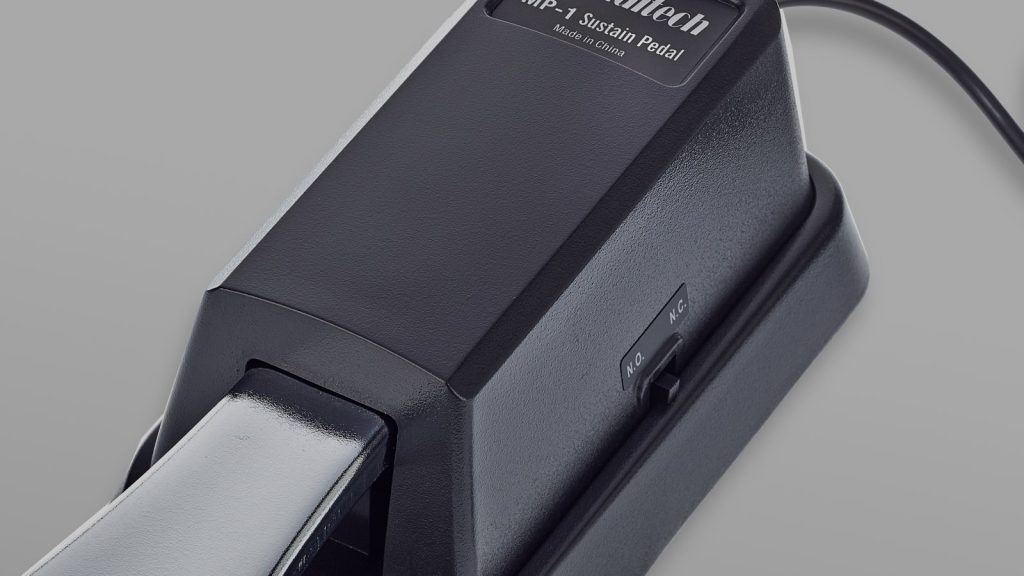
The simplest and cheapest pedals are designed as foot switches. When you press the pedal down, there is an electrical contact. It can be an open or a close contact – this is usually called polarity. It is less about the electrical polarity “plus or minus” and more about the type of contact: Normal Closed contact or Normal Open contact. This is usually indicated on the sustain pedals with N.C. or N.O.

Why should you care about this when buying pedals? Quite simply, many pedals, especially those in the lower price range, are configured at the factory and do not allow adjustment. If you connect a pedal with the wrong polarity, the switching function may still work – but in the opposite direction. Playing the piano that way takes some time to get used to.

Miditech MP-1 Switch Normal Open and Normal Closed
When in doubt, play it safe and buy a pedal with switchable polarity such as the Miditech MP-1 shown here. You can switch between Normal Open and Normal Closed.

*Affiliate link. These “advertising links” help us finance our website. If you buy a product through such a link, we receive a small commission – at no extra cost to you. The PIANOO.com team says thank you for your support!

ADVERTISEMENT

Related Articles

20.09.2025 · Buy Yamaha CLP-800 Series – Reviewing Clavinova Digital Pianos

In fall 2024, Yamaha announced the new CLP-800 series. The key refinements concern the sound generation and playback systems.

01.09.2025 · Buy Buyer’s Guide: A Portable Piano Under $2,000

With a scaled-down cabinet and speaker system, a portable piano under $2,000 offers a great keyboard and sound engine.

20.02.2025 · Buy Studiologic SL-mk2 Series – USB MIDI Controllers

The Italian manufacturer has introduced the new models of the Studiologic SL-mk2 series with new features and improved details.

20.02.2025 · Buy Speakers and Piano Sound: How Good Can Digital Pianos Really Sound?

Speakers and piano sound — does your digital piano sound better when you're using headphones? Find out why here.

13.02.2025 · Buy Kawai CN Series: CN-201 & CN-301

With their high-quality playability, the digital pianos in the Kawai CN series inspire both demanding beginners and advanced players.

09.02.2025 · Buy Product Review: Yamaha TransAcoustic Piano - Hybrid Piano

Piano or digital piano? The Yamaha TransAcoustic piano offers the best of both worlds. The perfect blend of acoustic and digital piano.

08.02.2025 · Buy Almost as Good as the Real Thing: Playing a Hybrid Digital Piano

Acoustic soundboard, grand piano action, and wooden keys: A hybrid digital piano combines maximum playing comfort with high-quality sound.

07.02.2025 · Buy Play Piano with Headphones: Hybrid Piano!

Play the piano with headphones - a hybrid piano combines an acoustic piano with a mute function and an electronic sound generation.

15.01.2025 · Buy Best Headphones for Digital Piano: Sound That Inspires

Buying high-quality headphones for digital piano: Why invest in good digital piano headphones and how much do they cost?

13.01.2025 · Buy Kawai ES Series: ES-920, ES520, ES-120, ES-60 – Portable Pianos

The Kawai ES Series is popular with beginners and advanced players alike: High-quality features at prices ranging from $400 to $1,200.

22.12.2024 · Buy Wireless MIDI: Play Piano or Keyboard Without Cables

Wireless MIDI systems are useful when the instruments themselves are not Bluetooth-compatible. But what makes a good Wireless MIDI adapter?

20.12.2024 · Buy Studiologic SL Series: SL73/88 Studio, SL88 Grand, SL|Mixface

The Studiologic SL series offers USB MIDI controllers with high-qualtiy hammer action keyboards for MIDI studio and live use.