ADVERTISEMENT

Connecting a Stage Piano to a Keyboard Amp

  • Keyboard amplifiers accurately reproduce keyboard signals without distortion. Stereo amplifiers are particularly well-suited for use with a stage piano.
  • Using a mono keyboard amplifier will affect the quality of the stereo piano sound. In this case, it is best to connect the stage piano to the amplifier through a mono output (e.g. L/Mono).
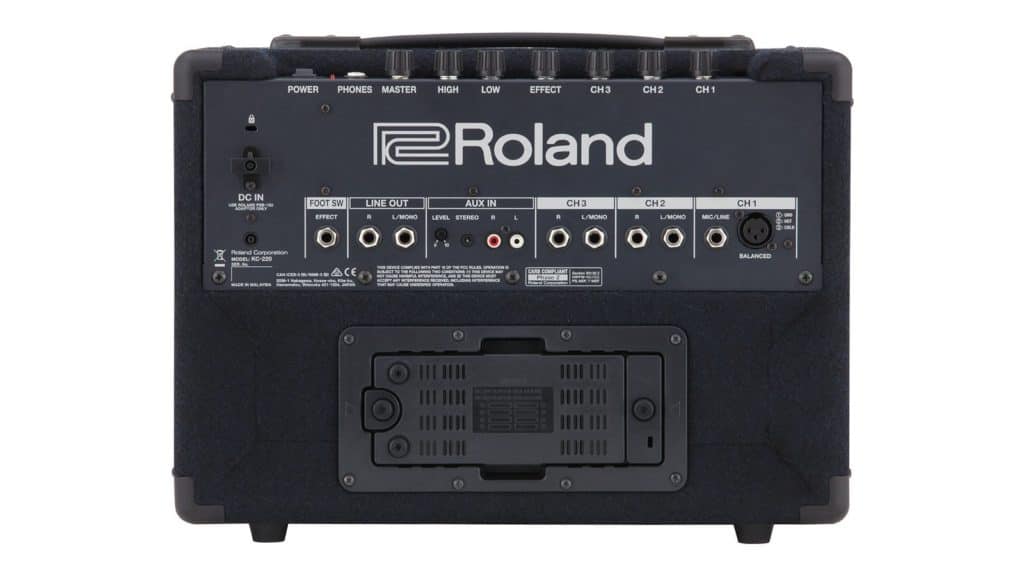
  • Line outputs on the keyboard amplifier are essential for routing the piano sound to a PA mixer.
keyboard-amplifier-image1
ADVERTISEMENT

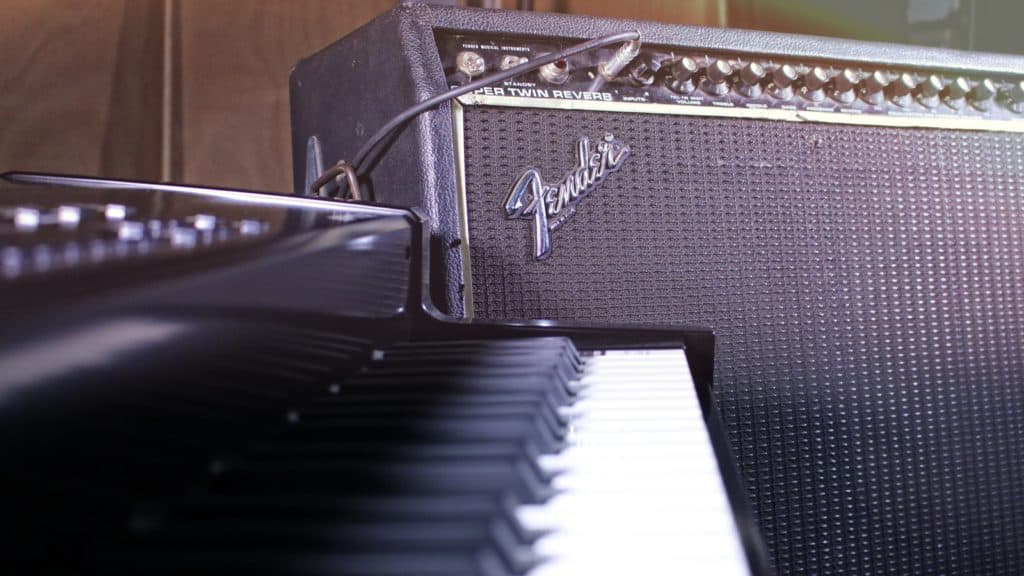
Do you want to play piano in a live band? Then you’re gonna need some power! Of course, you could use a guitar amp to boost the sound of your stage piano. However, the classic solution is connecting a keyboard amp to your stage piano or keyboard: Practical for jam sessions, band rehearsals, and live gigs, keyboard combo amplifiers provide pianists and keyboardists with all the necessary tools to stand out in a band.

ADVERTISEMENT
ADVERTISEMENT

Unlike a guitar amp, you don’t want your keyboard amp to add distortion – you want the opposite: a clean sound with clear highs, bass, and powerful mids. Also, keyboards and stage pianos usually play sound in stereo.
Connecting a Keyboard Amp to a Stage Piano: Stereo or Mono?

When connecting a stage piano to a combo amp, you may encounter a problem: Stage pianos often have a stereo sound whereas combo amps are typically mono. When playing the piano through such a combo amp, it will sound different from what you are used to when playing through headphones or stereo monitors.

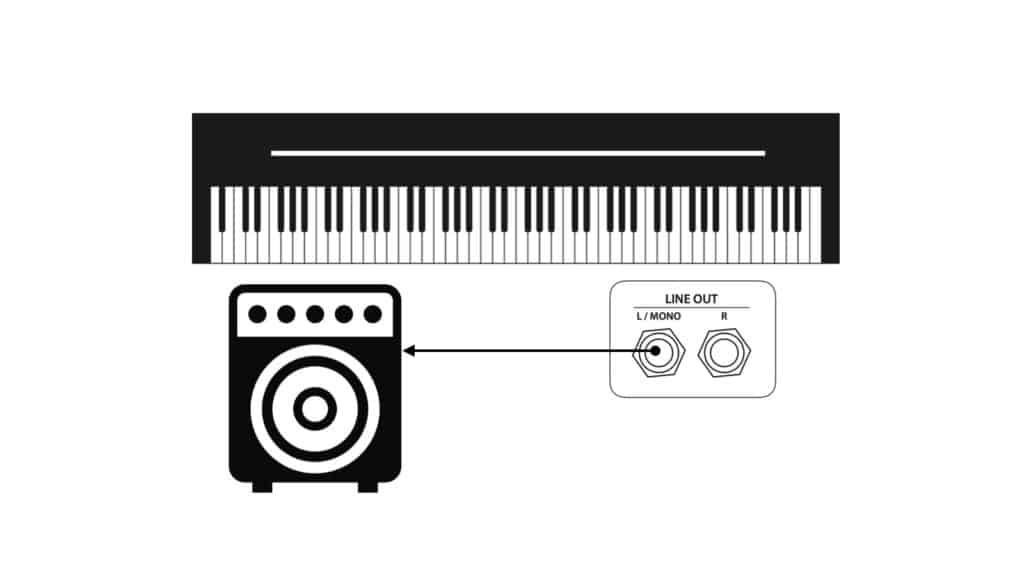
Most stage pianos and digital pianos have a monophonic audio output (e.g. L/mono). In this case, simply connect this jack to the input jack of the keyboard amplifier. Even if a keyboard amplifier has stereo inputs, this does not matter if the sound coming out of the speakers is always mono. In this case, the stereo-sampled piano sound can never develop its full potential. Instead, it may sound significantly worse than usual. On the other hand, if the combo amp is fully stereo, it will enhance the sound.

connecting-a-stage-piano
Preferably use the L/MONO output if you have a classic mono combo amp. However, some units have stereo inputs. Using a guitar amplifier may not be ideal for playing a digital piano.

Keyboard Amp Placement

You should never set up your keyboard amplifier with the speakers too close to your ears! Otherwise, it is important to note that there is no ideal placement for an amplifier. Most of the time you will have to compromise. The best way to place your amp depends on the situation:

  • Band rehearsal: You want to be heard by as many band members as possible. Set up the amp so that the speakers emit sound towards the other members.
  • Small gigs: This can be a little trickier as in addition to the sound of the band on stage, you also want the audience to hear you as a keyboard player. In this case, you need to choose a setup where the speakers of the keyboard amp face forward.
  • Amp as monitor: In larger live setups with a front-of-house (FOH) mixer, the keyboard amp is more likely to be used as a monitor for yourself. Again, you can experiment with speaker placement so that the band on stage can hear the keyboard amp as well.

Since it is counterproductive to place the amp on the floor, you can help yourself by placing it on a slightly elevated surface, such as a chair. Professional amp stands with adjustable tilt angles are also available.

roland-kc-220-connections

Route Monitor Mix via Line Out

If you want to use a keyboard amp as a monitor for larger live gigs, make sure the amp has a line output when you buy it. If the keyboard amp is stereo, the line output should also be stereo. A line-out output is standard on keyboard amps, but there are (rare) exceptions, so it’s best to check.

You can use the line-out output (Thru for active PA monitors) to route the signal of the amp to a vocal performance or PA mixer while using the keyboard amp as a monitor on stage. Since you want to adjust the volume of the amp itself to match the volume of the stage sound, this mustn’t affect the volume of the line output. Changing the volume in this way may really annoy a FOH mixer…

Affiliate Links
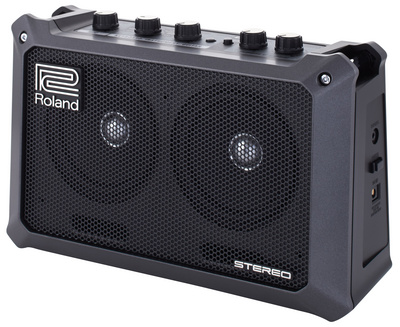
Roland Mobile Cube
Roland Mobile Cube
Customer rating:
(260)
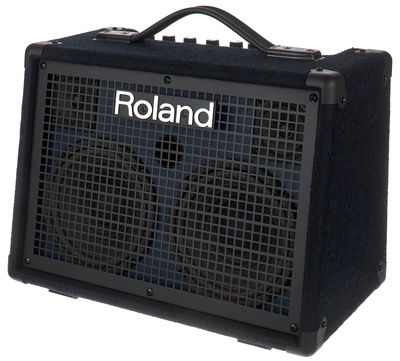
Roland KC-220
Roland KC-220
Customer rating:
(6)
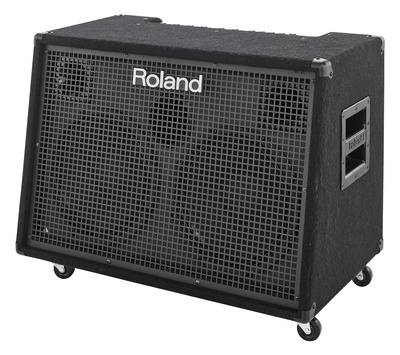
Roland KC-990
Roland KC-990
Customer rating:
(13)

Stage Piano and Keyboard Amp: 3 Different Combo Amps

As we all know, there are different ways to reach your goal – the right amp depends primarily on the intended use. Further, many keyboard amplifiers are available in different sizes. This little overview shows three different options…

1
AER Compact 60 III
Popular not only with guitarists! The AER Compact 60 Acoustic Guitar Amplifier also works well with a stage piano. Powerful, clear, and absolutely distortion-free sound, yet extremely small and handy.
aer-compact-60-iii-product-icon
2
Roland KC-220 - State-of-the-Art Keyboard-Amp
Small stereo amplifier with 2x 15 watts of power and built-in mixer with 3 input channels. 6.5″ woofer and 2 tweeters ensure clear, transparent keyboard sound. Read the review of the Roland KC-220 here…
roland-kc-220-product-icon
3
Laney AH150 - Keyboard-Amp und Wedge-Monitor
Designed as a classic keyboard amplifier, this is a practical tool for live keyboardists. The 150-watt mono amplifier comes with 3 input channels, so the amp can also be used as a stage monitor.
laney-ah-150-product-icon

*Affiliate link. These “advertising links” help us finance our website. If you buy a product through such a link, we receive a small commission – at no extra cost for you. The PIANOO.com team says thank you for your support!

ADVERTISEMENT

Related Articles

20.09.2025 · Buy Yamaha CLP-800 Series – Reviewing Clavinova Digital Pianos

In fall 2024, Yamaha announced the new CLP-800 series. The key refinements concern the sound generation and playback systems.

01.09.2025 · Buy Buyer’s Guide: A Portable Piano Under $2,000

With a scaled-down cabinet and speaker system, a portable piano under $2,000 offers a great keyboard and sound engine.

20.02.2025 · Buy Studiologic SL-mk2 Series – USB MIDI Controllers

The Italian manufacturer has introduced the new models of the Studiologic SL-mk2 series with new features and improved details.

20.02.2025 · Buy Speakers and Piano Sound: How Good Can Digital Pianos Really Sound?

Speakers and piano sound — does your digital piano sound better when you're using headphones? Find out why here.

13.02.2025 · Buy Kawai CN Series: CN-201 & CN-301

With their high-quality playability, the digital pianos in the Kawai CN series inspire both demanding beginners and advanced players.

09.02.2025 · Buy Product Review: Yamaha TransAcoustic Piano - Hybrid Piano

Piano or digital piano? The Yamaha TransAcoustic piano offers the best of both worlds. The perfect blend of acoustic and digital piano.

08.02.2025 · Buy Almost as Good as the Real Thing: Playing a Hybrid Digital Piano

Acoustic soundboard, grand piano action, and wooden keys: A hybrid digital piano combines maximum playing comfort with high-quality sound.

07.02.2025 · Buy Play Piano with Headphones: Hybrid Piano!

Play the piano with headphones - a hybrid piano combines an acoustic piano with a mute function and an electronic sound generation.

15.01.2025 · Buy Best Headphones for Digital Piano: Sound That Inspires

Buying high-quality headphones for digital piano: Why invest in good digital piano headphones and how much do they cost?

13.01.2025 · Buy Kawai ES Series: ES-920, ES520, ES-120, ES-60 – Portable Pianos

The Kawai ES Series is popular with beginners and advanced players alike: High-quality features at prices ranging from $400 to $1,200.

22.12.2024 · Buy Wireless MIDI: Play Piano or Keyboard Without Cables

Wireless MIDI systems are useful when the instruments themselves are not Bluetooth-compatible. But what makes a good Wireless MIDI adapter?

20.12.2024 · Buy Studiologic SL Series: SL73/88 Studio, SL88 Grand, SL|Mixface

The Studiologic SL series offers USB MIDI controllers with high-qualtiy hammer action keyboards for MIDI studio and live use.