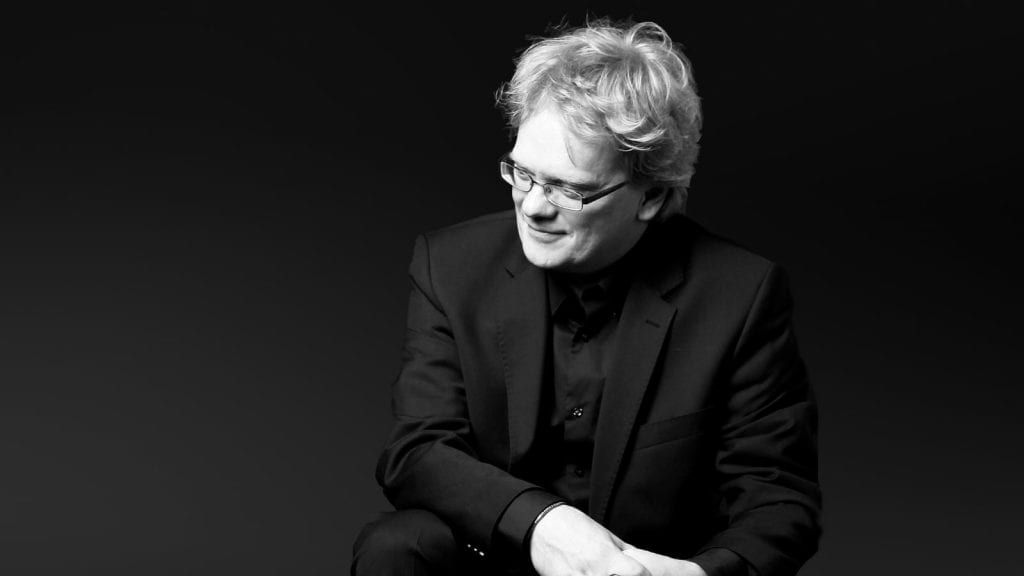
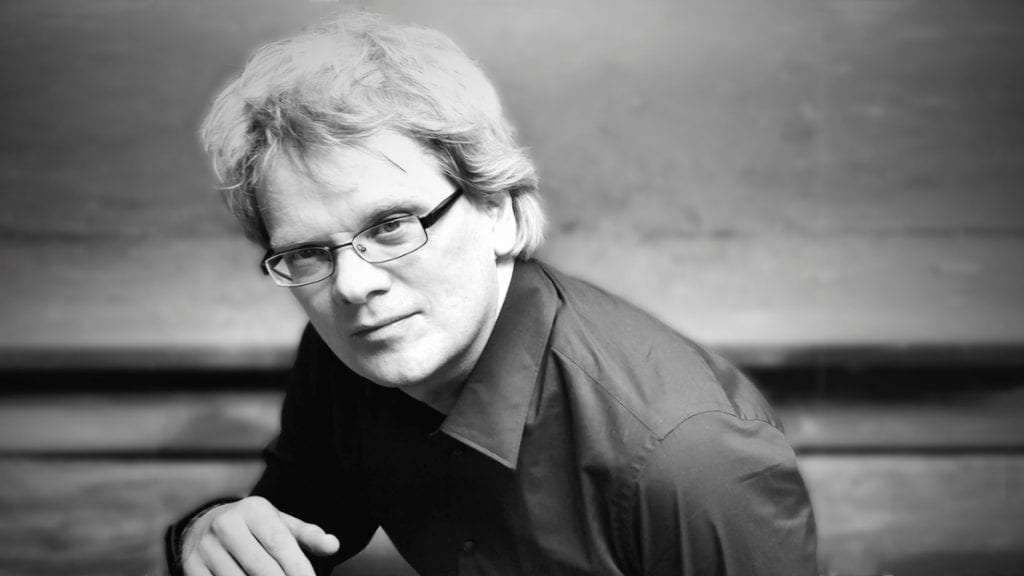
Michael van Krücker: “Piano am Park” Piano Studio
You’ve brought up another important topic: In addition to your work as a concert pianist, you also run your own piano studio, “Piano am Park,” in Krefeld. Are you still giving lessons even during the pandemic?
MvK: Yes, I do that online—I use Skype, WhatsApp, or FaceTime, which work quite well even with an iPhone and iPad.
Thankfully, it’s relatively easy from a technical standpoint. But it is still limiting, isn’t it?
MvK: Well, I’ve known the students I teach online for quite some time now. And they’re pretty good at applying the tips I give them.
According to your website, you offer piano lessons, workshops, chamber music, and college preparation. Do you also accept students who are beginners at the piano?
MvK: It really varies. Some are preparing for college, some come to me from college, but I also teach beginners. However, it’s important to me that the students want to learn on their own initiative. I find it more difficult when parents put pressure on them.
It’s certainly different when you have to motivate someone to learn versus when it comes naturally…
MvK: Yes, that’s for sure. The youngest student at my music school is seven years old. After just half a year, he’s already worked his way through four piano method books. He’s doing it entirely on his own initiative. Sometimes I actually feel like I have to slow him down a bit (amused). Generally speaking, it comes down to me noticing that someone has the curiosity to learn something new. But as I said, it varies widely: The youngest is seven, and the oldest student is over 80. If the interest and willingness are there, if someone really wants to learn, then it’s not a problem at all.
Other than that, I currently have a few students who are preparing for the entrance exam to study music. I explain what they can expect and what they need to know. We go over theory, ear training, and so on. I also put together a program of about 15–20 minutes with the students. We always do this together, since I contribute various program ideas. So if it’s going to be a Haydn sonata, I first suggest several sonatas for them to get to know. Just imagine a student playing something while actually wondering why they’re supposed to play it. That just can’t work.
That, too, must certainly come from within oneself, so that the necessary depth can develop…
MvK: That’s very important to me.
During an entrance exam, isn’t it also ultimately critical to play something you’re truly convinced of and perform it with complete dedication?
MvK: For my part, I prefer to take an open and flexible approach to program, so that the inner freedom to make music is guaranteed.
We’ve just been talking about your perception of sound, and then about teaching. Besides the traditional acoustic piano, the digital piano is a reality for many people. How do you perceive the sound of digital instruments? Is it immediately dismissed as sounding cold or like a simulation?
MvK: Well, I approach this completely without bias, because I generally enjoy listening to everything. At first, I’m not at all concerned with how it was created from a technical standpoint or what possibilities it offers. I want to be moved by it first, so that I can say, “This is music, and it comes across.” If that’s the case, then a lot has already been achieved.
Finally, there’s the question of practicing and learning. How do you approach that?
MvK: I’ve gotten into the habit of thinking of my time at the instrument as if I were entering a secluded, quiet, and beautiful place. And then I’m happy that I get to be completely alone with myself. The word “practice” has somewhat negative connotations for me, since it sounds so much like work. And after all, it’s called playing the piano, not working the piano. And since you are, after all, playing, it has to sound—and be—playful.
Do you have specific routines that you use to structure your practice sessions?
MvK: I start with a few specific exercises. But don’t imagine that I start exactly at 8:00 a.m. and finish at 8:15 a.m.—that’s not me. The schedule is flexible because sometimes I just sit down and play. I tend to decide based on my gut feeling.
So, the focus is more on making music and playing itself than on practicing specific runs and scales?
MvK: It depends on what level you’re at right now. In most pieces, such as Haydn or Mozart sonatas, there are plenty of runs you can play at a comfortable tempo and use, so to speak, as “practice scales.” But yes—of course, it’s always beneficial to study something in advance.
What advice would you give to beginners and aspiring concert pianists?
MvK: Joy! Above all, it’s important to find joy in playing the piano. Something I always love to say to everyone, whether they’re just starting out or are already advanced: Playing the piano is like climbing a mountain. The air gets thinner, but the view becomes more beautiful and expansive. However, it’s also very important to look back. Because no matter how far away the goal may still seem, it’s always important to recognize and remind yourself of how far you’ve already come.
Mr. van Krücker, thank you very much for the interview.