ADVERTISEMENT

Where to Position Your Digital Piano

  • Several factors can affect the sound of a digital piano. In addition to the speakers, the cabinet construction and placement of the digital piano in the room are important factors.
  • Since electronic instruments require electricity, it’s best to place a digital piano near an electrical outlet.
  • If you plan to place the digital piano under a wall shelf, be sure to check the height of the instrument before purchasing.
digital-piano-location-casio
(Image Source: Casio)
ADVERTISEMENT

There are several factors to consider when positioning your new digital piano. The playback systems of digital pianos vary greatly, so it is worth taking a closer look at the details. And there are a few other factors to keep in mind.

ADVERTISEMENT
ADVERTISEMENT

When you buy your first digital piano, you probably already know where you want it to go – and it will most likely be in your living room. A wise choice, because music should be at the center of your life, and a musical instrument in a prominent place shows a sense of art and culture.

Playing Also Means Practicing!

One thing to remember when positioning your digital piano is that if you want to play the piano, you also have to practice! It doesn’t make sense to place a digital piano in an area of the living room that may have other priorities. For example, practicing while someone else is watching TV simply won’t work.

Digital Piano Sound

Do you primarily plan to play the digital piano with headphones? In this case, the location is not as critical. However, you still shouldn’t place the piano right next to a TV. Otherwise, the same applies to a digital piano as to a piano: Playing loudly, i.e., without headphones, should fill your living room with beautiful sound. Digital musical instruments differ from acoustic ones in this respect as the orientation of the built-in speakers has a significant effect on the sound they produce.

where-to-position-portable-piano
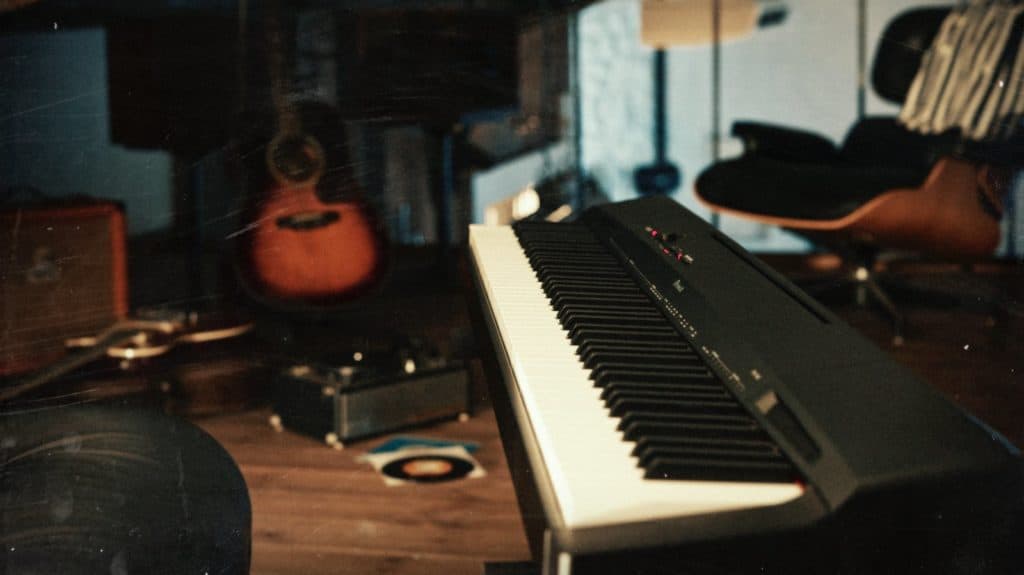
Portable pianos are always a good idea! With the built-in speakers facing up, you can place the instrument anywhere in the room (Image Source: Casio)

Correctly Positioning Your Digital Piano: Mind the Speakers!

There are big differences here: The speakers are either built into the control panel area, facing up, or located under the keyboard. In addition, hybrid models with woofers facing down and tweeters facing up or out for a nice stereo effect are also available. The basic rule is that the more sophisticated the instrument, the more important it is to correctly position the digital piano to get the most out of its sound.

Place Your Digital Piano Away From the Wall

Typical home pianos are designed to be placed with the back of the piano against the wall. In any case, you should leave about 10-20 centimeters of space between the instrument and the wall. Please be especially careful with digital pianos that have speakers that face backward. If you place such a digital piano too close to the wall, you won’t be able to get the full potential out of the speakers.

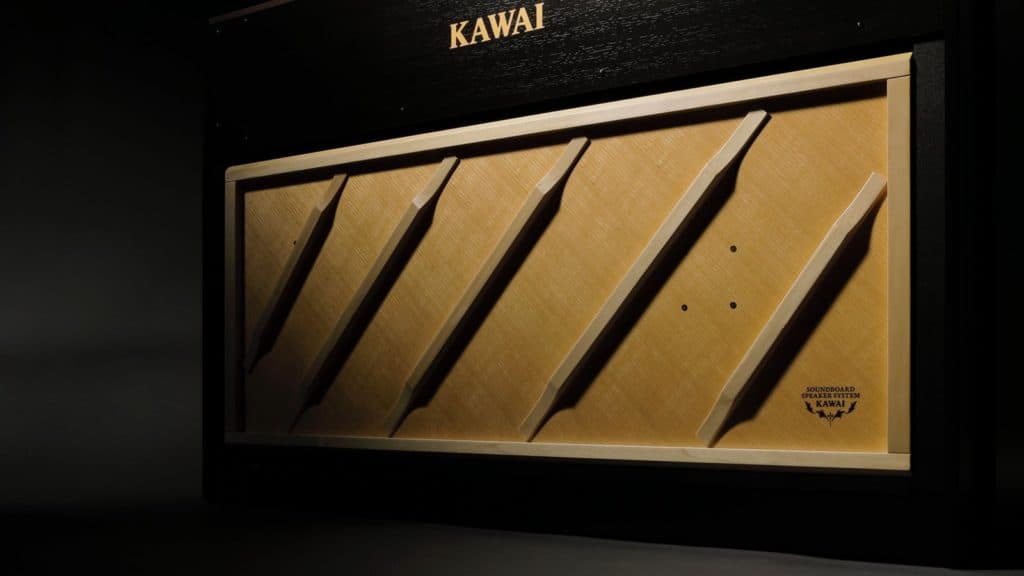
Kawai CA98 Soundboard System
There should always be some distance between a Kawai hybrid digital piano with a soundboard system and a wall. This allows the sound to unfold its full potential. Otherwise, adjusting the EQ will help you achieve the perfect piano sound.

Sound reflection may also distort the sound of the instrument if the distance from the wall is too small. Hybrid digital pianos with a soundboard system, such as the Kawai CA-901, even behave similarly to acoustic pianos. Consequently, they will not achieve their full sonic potential if placed too close to the wall.

Digital Pianos and Radiators

While this is more relevant with acoustic instruments, in some ways it also applies to digital pianos. Placing a piano too close to a radiator may cause the soundboard to crack because the thin wood of the soundboard is sensitive to drying.

Digital pianos are much less sensitive in this regard. However, digital pianos can also suffer from severe temperature fluctuations, especially if they have wooden keys or a transducer soundboard.

Customizing Digital Piano Sound for Room Acoustics: EQ Profiles!

Every room has a specific acoustic profile: Reflections cause resonances that can boost or cut certain frequencies. This means that the sound of the digital piano, which is perfect in theory, can sound quite unbalanced when played through the digital piano’s built-in speakers.

In such cases, EQ profiles found in the system settings of higher-end digital pianos can be helpful. These are pre-defined equalizer settings that you can easily apply without any sound engineering know-how. Ideal for home users!

Tuning Piano Sound – Not for Beginners!

In the case of persistent room resonance, it may be possible to improve the situation using special editing functions. Most of the editing functions of Virtual Technician or PianoRemote (Kawai), Piano Designer (Roland), and Piano Room/Smart Pianist (Yamaha) have a global effect on the entire sound. However, you can adjust some functions individually, note by note. Kawai digital pianos offer key volume, while Roland Piano Designer also allows you to change the character of the sound. These can be useful service functions for piano dealers and builders – but as a layman, it’s best to leave them alone. Nevertheless, this is how it’s done…

How to compensate for the accentuation of individual notes due to room resonance:

  • First, open the Edit menu. On Kawai digital pianos, this is the User Key Volume function in the Virtual Technician, on Roland Piano Designer it is Single Note Volume or Single Note Character.
  • Now play the notes of the digital piano in order, from the lowest bass to the highest note. Sometimes a bass note will boom, or a treble note will stand out with a shrill sound.
  • You can use the display or the iPad app to reduce the volume of the distracting notes so that they blend in with the overall sound.

Make sure you know what you are doing when making these sound changes. Otherwise, you run the risk of making the piano sound worse. Also, do not expect miracles from this technical option. Even the most flexible editing options cannot compensate for fundamentally poor room acoustics. Parameters such as key volume and sound character are for fine-tuning – nothing more.

Power Needed

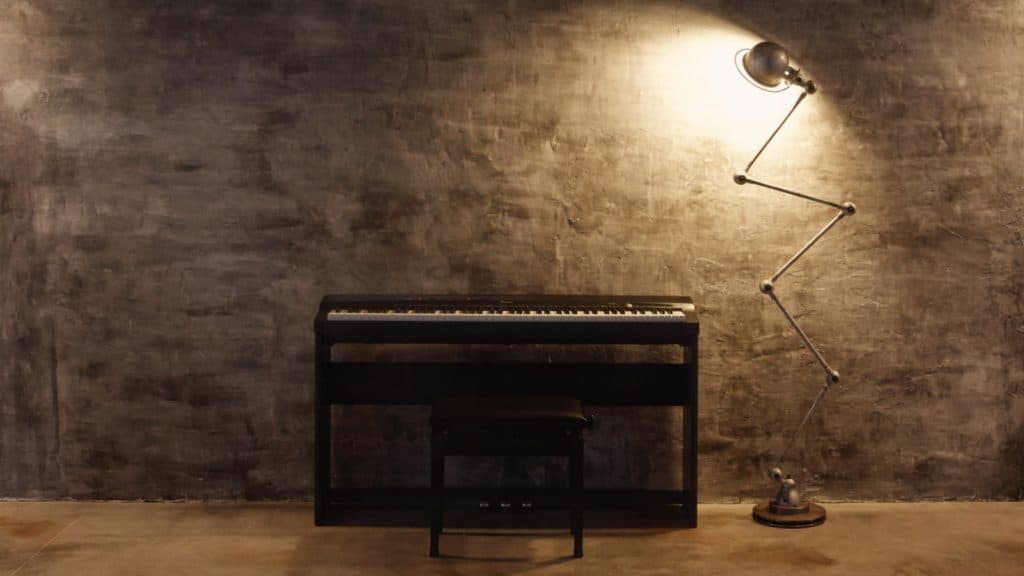
It is best to place the digital piano in a location that is not too far from the nearest power outlet. As a general rule, avoid running power cords across the room, as they are a dangerous tripping hazard. Keep external power supplies and outlets away from areas where you move around.

What to Know About Digital Piano Height

Digital pianos and wall shelves are a wonderful combination and a convenient way to keep sheet music and other accessories within easy reach. If you plan to place your new digital piano under a shelf or bookcase, don’t forget about the music stand. There’s one more thing to consider when placing a digital piano in a room, even after taking into account both the height of the piano and the music stand: Make sure there is enough space for an average-sized music book, approximately a foot (30 cm) high.

The specifications for digital pianos do not always include the height of the instrument, so it is worth checking before you buy! Some manufacturers list the height without the music stand, while others list both heights – with and without the music stand.

Where to Position Your Digital Piano: Away From the Flowers, Please!

Electronics and moisture are a notoriously bad match. So, while flowers may look nice on a piano, they simply don’t belong there! It’s all too easy for water to seep into the digital piano when watering flowers. Or imagine a water-filled vase of flowers tipping over – in a matter of seconds, this would ruin a digital piano forever.

ADVERTISEMENT

Related Articles

20.09.2025 · Buy Yamaha CLP-800 Series – Reviewing Clavinova Digital Pianos

In fall 2024, Yamaha announced the new CLP-800 series. The key refinements concern the sound generation and playback systems.

01.09.2025 · Buy Buyer’s Guide: A Portable Piano Under $2,000

With a scaled-down cabinet and speaker system, a portable piano under $2,000 offers a great keyboard and sound engine.

20.02.2025 · Buy Studiologic SL-mk2 Series – USB MIDI Controllers

The Italian manufacturer has introduced the new models of the Studiologic SL-mk2 series with new features and improved details.

20.02.2025 · Buy Speakers and Piano Sound: How Good Can Digital Pianos Really Sound?

Speakers and piano sound — does your digital piano sound better when you're using headphones? Find out why here.

13.02.2025 · Buy Kawai CN Series: CN-201 & CN-301

With their high-quality playability, the digital pianos in the Kawai CN series inspire both demanding beginners and advanced players.

09.02.2025 · Buy Product Review: Yamaha TransAcoustic Piano - Hybrid Piano

Piano or digital piano? The Yamaha TransAcoustic piano offers the best of both worlds. The perfect blend of acoustic and digital piano.

08.02.2025 · Buy Almost as Good as the Real Thing: Playing a Hybrid Digital Piano

Acoustic soundboard, grand piano action, and wooden keys: A hybrid digital piano combines maximum playing comfort with high-quality sound.

07.02.2025 · Buy Play Piano with Headphones: Hybrid Piano!

Play the piano with headphones - a hybrid piano combines an acoustic piano with a mute function and an electronic sound generation.

15.01.2025 · Buy Best Headphones for Digital Piano: Sound That Inspires

Buying high-quality headphones for digital piano: Why invest in good digital piano headphones and how much do they cost?

13.01.2025 · Buy Kawai ES Series: ES-920, ES520, ES-120, ES-60 – Portable Pianos

The Kawai ES Series is popular with beginners and advanced players alike: High-quality features at prices ranging from $400 to $1,200.

22.12.2024 · Buy Wireless MIDI: Play Piano or Keyboard Without Cables

Wireless MIDI systems are useful when the instruments themselves are not Bluetooth-compatible. But what makes a good Wireless MIDI adapter?

20.12.2024 · Buy Studiologic SL Series: SL73/88 Studio, SL88 Grand, SL|Mixface

The Studiologic SL series offers USB MIDI controllers with high-qualtiy hammer action keyboards for MIDI studio and live use.