ADVERTISEMENT

Review: Kawai Novus NV-12 – High-End Hybrid Digital Grand Piano

  • The Kawai Novus NV-12 is the new flagship model in the Novus series, replacing the NV-10S.
  • As a hybrid digital piano, the NV-12 combines the design of a modern grand piano with high-quality components from digital and acoustic piano manufacturing.
  • One of its standout features is the PentaDrive transducer soundboard system, which provides vivid acoustic sound reproduction.

Pros and Cons

  • Excellent sound quality
  • Fantastic playing feel
  • PentaDrive soundboard system
  • Extensive range of features
Kawai Novus NV-12 – Location
(Image Source: Kawai)
ADVERTISEMENT

If you’re looking for the highest-quality digital piano, hybrid digital pianos are well worth considering. Offering superior sound and playing feel, they combine the electronic sound generation of a digital piano with a keyboard and hammer action derived from traditional acoustic piano manufacturing. And at the very top of this category sits the Kawai Novus NV-12.

ADVERTISEMENT
ADVERTISEMENT
…comes remarkably close to a concert grand.

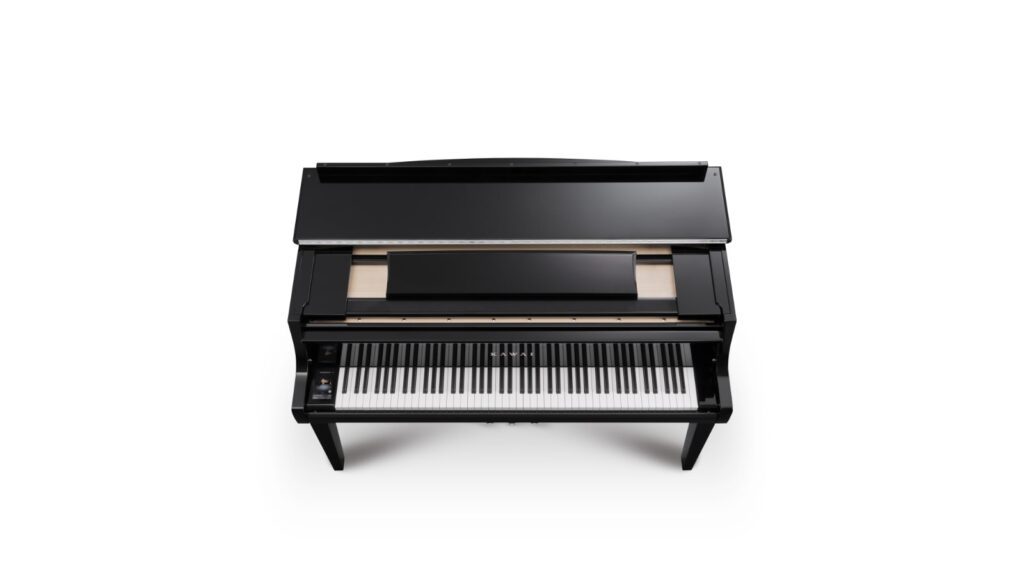
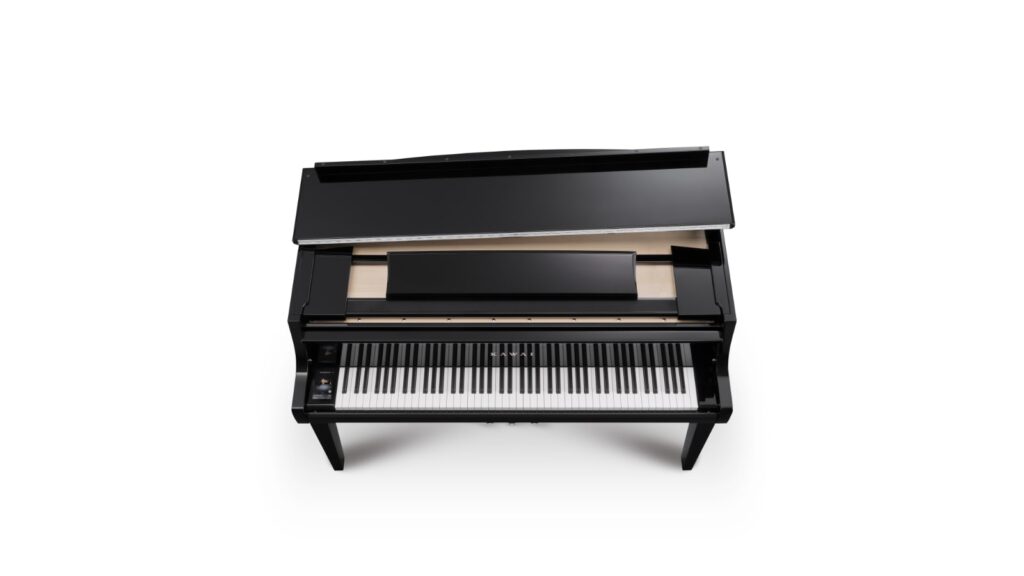
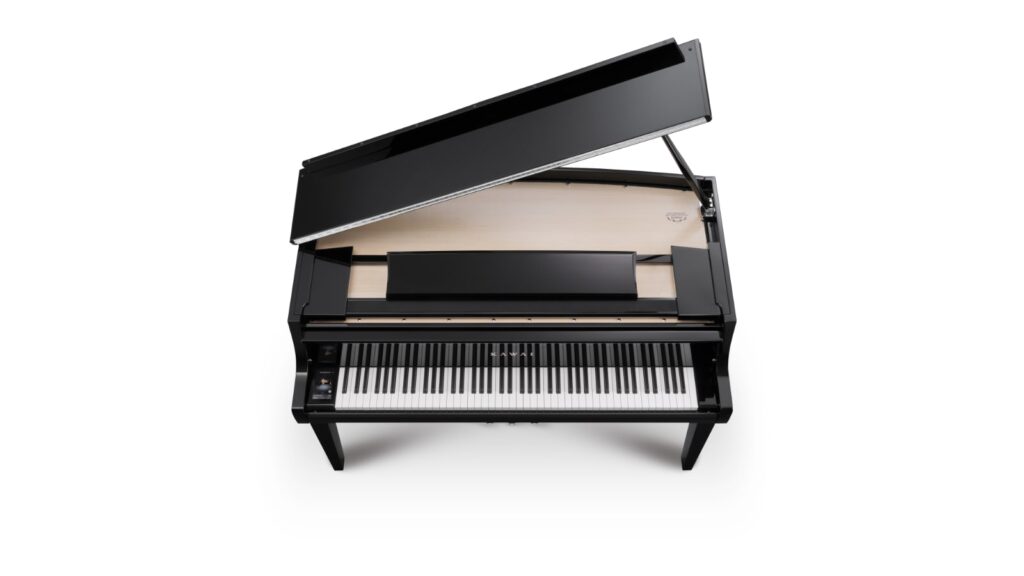
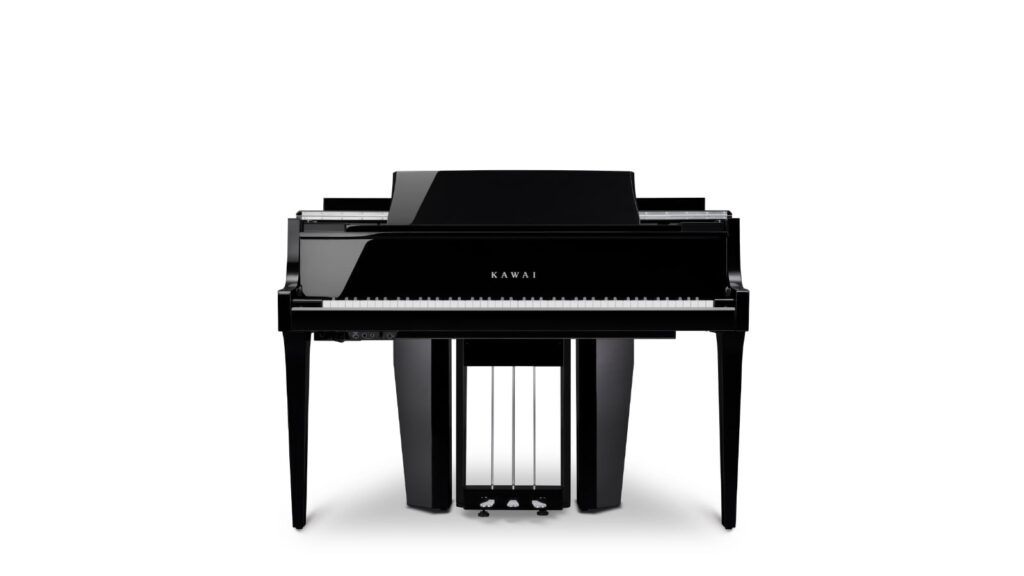
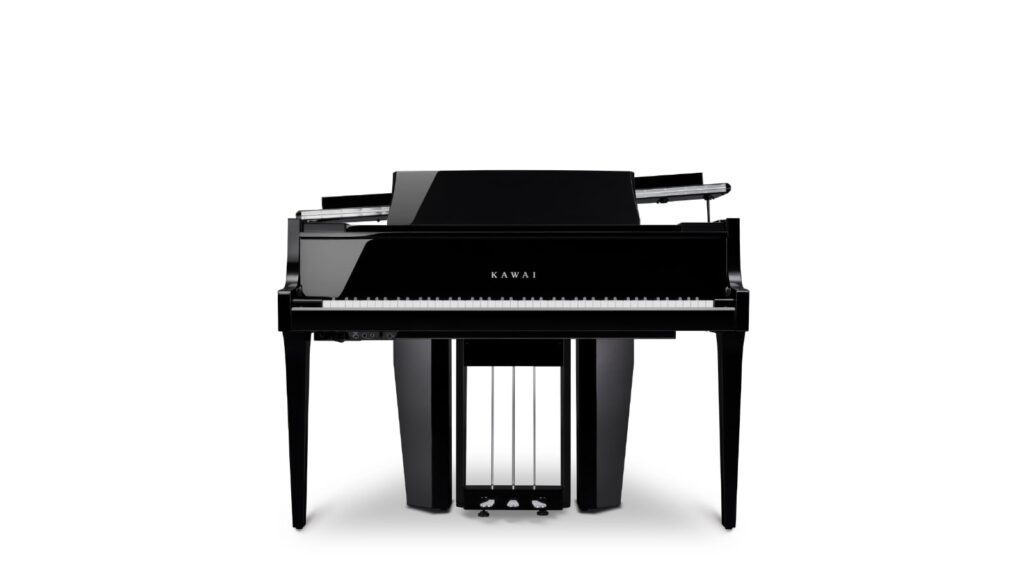
At first glance, you might think, “Yes! This is exactly how I always imagined a high-end digital piano would look.” Its subtle nod to the acoustic grand piano, combined with a modern design, creates a truly impressive appearance.

Kawai Novus NV-12 Review with Jazz Pianist Yacine Khorchi

You are currently viewing a placeholder content from YouTube. To access the actual content, click the button below. Please note that doing so will share data with third-party providers.

More Information

Of course, the Kawai Novus NV-12 is smaller than an acoustic grand piano, but this difference is barely noticeable once you sit down to play. From this perspective, the illusion is remarkably convincing.

Nevertheless, I recommend closing your eyes and simply starting to play before taking in the design. The experience is magnificent, not only because of the NV-12’s PentaDrive soundboard system, but also due to the seamless integration of its high-end components.

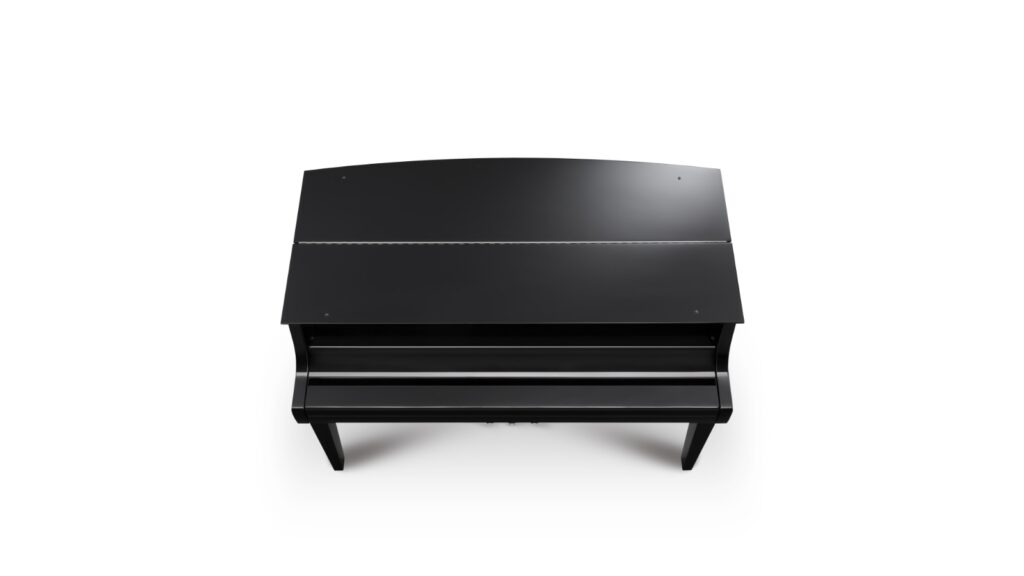
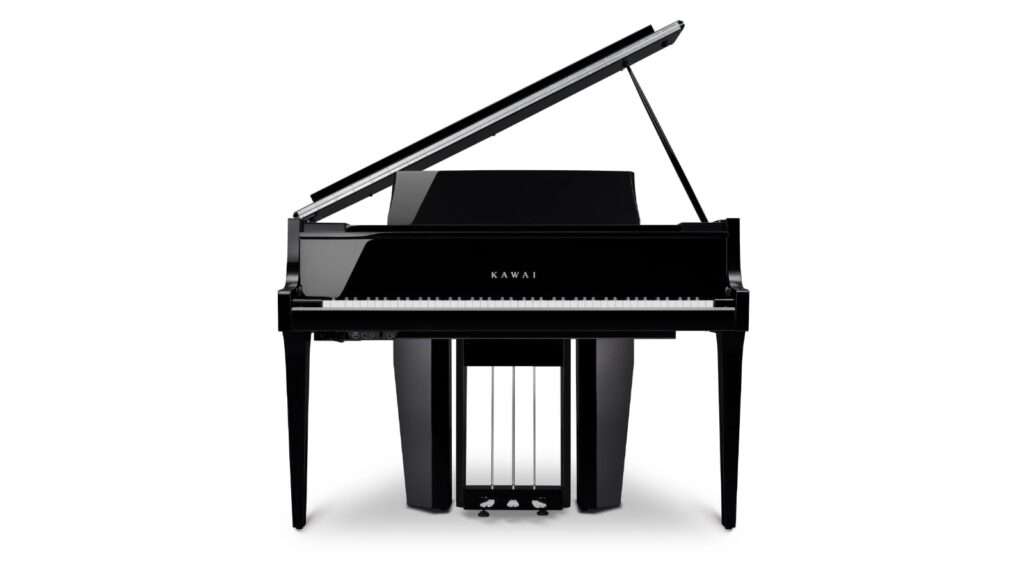
The Kawai Novus NV-12 boasts a stylish design and excellent sound. (Image Source: Kawai)

What Are the Benefits of Transducer Technology in the NV-12?

Transducer-driven soundboards have long been a hallmark of the Japanese piano manufacturer’s CA series. In every test, most recently with the Kawai CA-901, this technology has proven highly impressive. The soundboard system not only enhances sound projection, but also shapes the instrument’s overall tonal character and playing experience, bringing it significantly closer to that of an acoustic piano.

The predecessor model, the NV-10s, already offered high-quality sound, but still relied on a conventional speaker system. By comparison, the Kawai Novus NV-12 not only sounds better, but also fundamentally different. This is clearly attributable to the transducer-driven soundboard. Unlike traditional speakers, the resulting sound radiation is less directional.

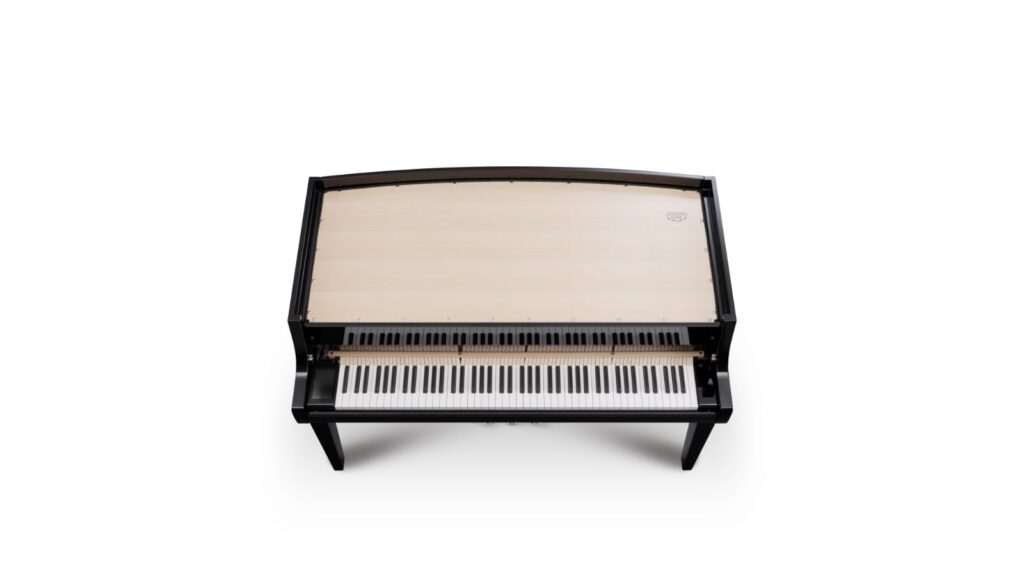
PentaDrive: Five transducers transmit the high-resolution electronic sound to the acoustic soundboard. (Image Source: Kawai)

How Does the New Soundboard Perform?

Although the manufacturer has many years of experience with transducer-driven soundboard systems, the Kawai Novus NV-12 represents a completely new approach. Unlike upright-style designs, the soundboard cannot simply be mounted on the rear panel of a digital grand piano’s cabinet.

To address this, an entirely new system was developed: a soundboard that is horizontally built into the instrument’s cabinet. Whereas other Kawai models combine diffuser speakers with a soundboard, the NV-12 dispenses with conventional loudspeakers altogether—an absolute first in the digital piano sector.

The NV-12’s soundboard system uses five transducers (rather than the more common two) to convert the electronic sound into air vibrations via the soundboard, hence the name “PentaDrive.”

Vivid, Realistic Sound

With this new system, Kawai has succeeded in creating a vivid tonal character unlike anything previously heard from a digital piano. Of course, there is still a difference between playing an acoustic Shigeru Kawai concert grand and playing the NV-12. However, the sound that unfolds when sitting down at the NV-12 is remarkable.

In some ways, this can even feel disorienting: The NV-12 does not sound exactly like an acoustic instrument, yet it also bears little resemblance to a conventional digital piano. Instead, it occupies a space somewhere between the tactile experience of an acoustic piano and the precision of a high-quality studio recording of a concert grand. It takes time to become accustomed to this unique sonic response. It represents an entirely new approach, offering a spatial sound image with a distinctly acoustic presence.

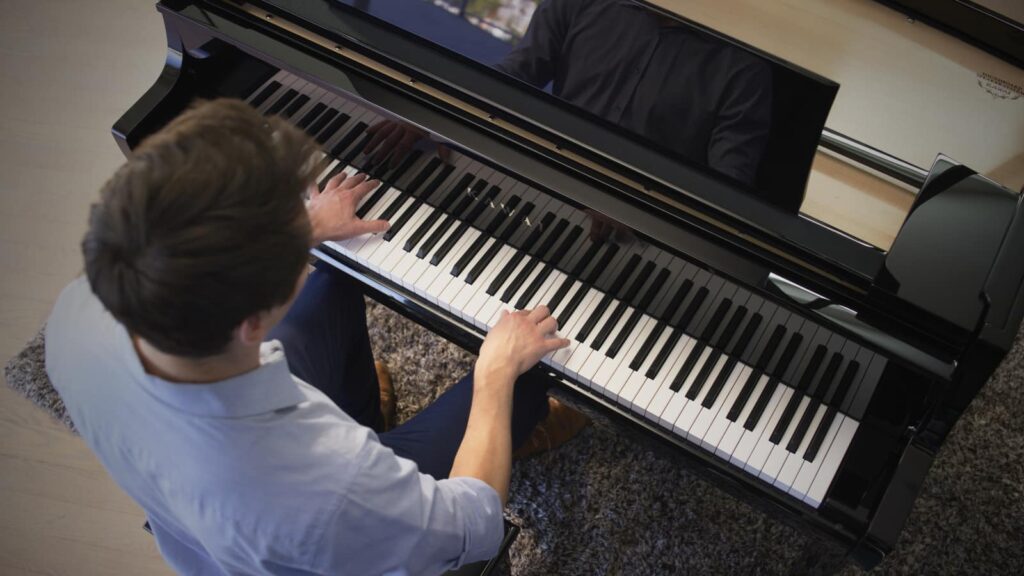
Fortissimo!

Remarkably, the Kawai Novus NV-12 delivers an exceptional sound not only from the player’s position but also throughout the entire room for listeners. Conventional speaker systems typically have just one optimal listening position: the player’s position. Anywhere else, the sound quality often deteriorates, becoming diffuse and losing depth.

This is not the case with the NV-12. Its sound system is impressively powerful. It’s worth taking the time to adjust the volume to suit your room’s acoustics. The NV-12 is easily capable of filling even generously sized spaces with a rich sound.

The new PentaDrive system delivers exceptional sound quality and also offers a sound shaping element: The soundboard is positioned beneath the grand piano lid. When the lid is closed, this results in a more muted, intimate tone. As soon as you open it, the instrument’s rich overtones are able to unfold and project naturally into the room.

Piano Sounds of the Kawai Novus NV-12

The Shigeru Kawai SK-EX is reproduced as a high-resolution digital instrument model, offering exceptional precise voicing. This is made possible by Kawai’s SK-EX Rendering sound engine, which represents the pinnacle of digital piano technology in terms of tonal depth, clarity, and nuanced resonance behavior.

In addition, the SK-EX Rendering system allows for extensive customization (voicing, intonation). This results in a remarkable range of expressive sound-shaping possibilities, which are discussed further in the article Kawai Virtual Technician.
String resonance, damper noise, and key-off noise are all elements that dynamically contribute to a realistic tonal image.

In terms of both sound quality and tonal variety, the NV-12 stands out, offering multiple concert grand and upright piano models.

At first glance, one might assume that these sounds are already familiar from models such as the Kawai CA701 and Kawai CA901. So, is there anything new here? Yes and no. This instrument must be considered as a whole: It consists of far more than piano sounds and a soundboard. Additional components, including the cabinet, keyboard, and hammer action, contribute to a unique playing experience.

Exquisite Playing Feel

We have frequently praised the superb touch of Kawai’s CA series—and here, those qualities are presented at their very best.

Kawai has equipped the Kawai NV-12 with the Millennium III hybrid action featuring graduated ABS-carbon hammers. This mechanism enables exceptionally nuanced dynamic control. Unlike conventional digital keyboards that rely on electronic contacts, the key movement here is detected by an optical sensor system. Additionally, the interaction between the key weighting and the damper pedal perfectly complements the combination of electronic sound generation and wooden action.

Speaking of pedals, a convincing playing experience would be incomplete without them. Here, too, Kawai uses high-quality components.

Note that the keyboard and pedal systems are electronically interlinked. For this reason, do not test the NV-12 while it is switched off, as this would not accurately reflect the instrument’s true playing feel.

Digital Piano Functions in the Kawai NV-12

Despite its many acoustic-inspired qualities, the Kawai Novus NV-12 remains a fully featured digital piano that offers all the expected features of this category.

A notable addition is the built-in USB audio/MIDI interface, which allows external devices to be seamlessly routed through the instrument’s amplification system. We tested this with the iOS version of Modartt Pianoteq and were impressed: Even Pianoteq’s modeled piano sounds benefit remarkably from the NV-12’s soundboard-based speaker system.

If you are expecting a typical hi-fi sound, note that the Kawai Novus NV-12 does produce stereo audio, though it is reproduced differently due to the soundboard system. As a result, sound dispersion behaves differently than with conventional hi-fi speakers. However, when playing along with backing tracks, the result feels cohesive—simply great.

Beyond this, the NV-12 includes the full range of digital piano features: layer and split modes, MIDI functionality, compatibility with Kawai PianoRemote, built-in études, and more. Nothing essential is missing.

Kawai Novus NV-12 in Comparison

There is no doubt that Kawai Novus NV-12 combines premium components to deliver an exceptionally refined digital piano. Of course, this comes at a price, raising the question of whether you should invest in a real acoustic instrument right away.

Within Kawai’s own lineup, the Kawai K-500 AURES occupies a comparable price range. Equipped with a digital transducer system, it offers similar hybrid functionality, while also providing a fully acoustic upright piano. However, it remains a traditional upright, lacking the modern design of the NV-12. Moving to the grand piano category, the Kawai GL-30 AURES sits roughly $15,000 above the NV-12. Without the AURES transducer system, the GL-30 would still be approximately $8,000 more expensive than the NV-12.

When comparing hybrid and purely acoustic instruments, factors such as sound level versus headphone capability, maintenance, regulation, and tuning costs should always be taken into account. Finally, within the Novus series itself, the Kawai Novus NV-6 represents a more affordable upright-style alternative.

Kawai Novus NV-6 review.

Conclusion: Pure Amazement!

The Kawai Novus NV-12 delivers a playing experience that comes remarkably close to that of a concert grand. Anyone familiar with the Kawai CA-901 or Kawai CA-701 will immediately notice that the NV-12 operates on an entirely different—and significantly higher—level.

This is not a budget instrument, but rather a reference-class hybrid that sets new standards within its category. Its premium components are meticulously integrated to form a cohesive system.

The NV-12’s quality can be both heard and felt. It demonstrates how profoundly an exceptional instrument can inspire musical expression. Quite simply, it is a joy to play.

Kawai Novus NV-12 – Overview

Release date: October 2025
Keyboard: Millennium III Hybrid action, optical sensor system, let-off simulation, Ivory Touch
Polyphony: 256 voices
Apps: PianoRemote (Android/iOS), PiaBookPlayer (Android/iOS)
Special features: Premium component design, PentaDrive soundboard system
Manufacturer/Distributor: Kawai

*Affiliate link. These “advertising links” help us finance our website. If you purchase a product through one of these links, we receive a small commission at no additional cost to you. The PIANOO.com team thanks you for your support!

Pros and Cons

  • Excellent sound quality
  • Fantastic playing feel
  • PentaDrive soundboard system
  • Extensive range of features

Janis Theurer

Long story short: The Kawai Novus NV-12 delivers a playing experience that comes remarkably close to that of a concert grand.

Novus NV-12 :   13.990,00 €

TO THE OFFER

Novus NV-12 :   13.990,00 €

TO THE OFFER
ADVERTISEMENT

Highlight · Hybrid digital piano · Kawai digital piano

Review

ADVERTISEMENT

Related Articles