Alexandra Sostmann

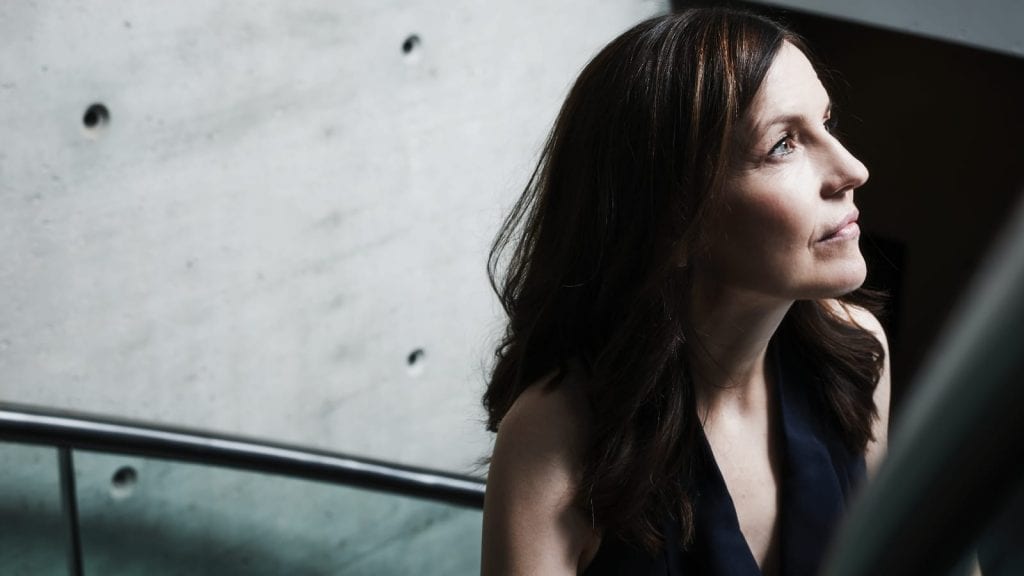
Alexandra Sostmann (Photo: Felix Broede)
ADVERTISEMENT

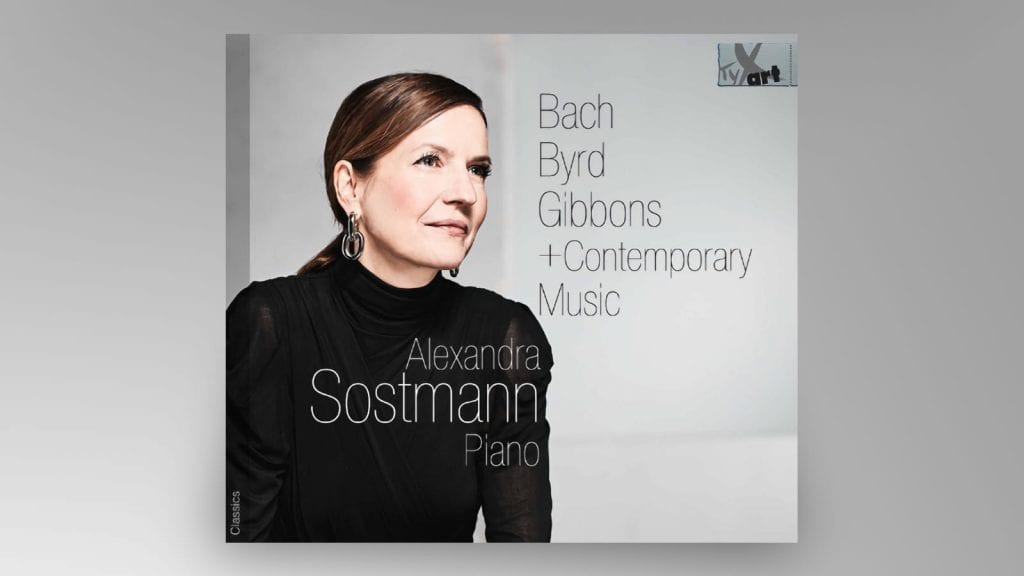
It feels as though I’m being drawn into another dimension—that’s my immediate impression when I listen to Alexandra Sostmann’s latest album, Bach, Byrd, Gibbons + Contemporary Music. On it, she performs piano works spanning remarkably diverse musical eras, from the Renaissance to the present day. It’s an almost daring combination, yet one that achieves a fascinating sense of cohesion. Performed with such precision of tone and expression, it makes time stand still.

ADVERTISEMENT
ADVERTISEMENT

I’ll gladly admit that until now, I thought I knew enough about Baroque music from Bach and Buxtehude alone. But this superbly performed album has broadened my horizons. It is undoubtedly Alexandra Sostmann’s playing that brings music from such diverse eras into the present day without ever sounding deliberately modern. Each musical period retains its own distinct voice.

A classically trained concert pianist, Alexandra Sostmann performs as both a soloist and chamber musician while also collaborating with artists from other disciplines. One example is her collaboration with choreographer and ballet director Jutta Ebnother on the production of The Lady of the Camellias for the Nordhausen Ballet. Also noteworthy is her piano duo partnership with Michael van Krücker.

Ms. Sostmann, how did you get into playing the piano?

AS: I have older siblings, and there was always a lot of music in our home. That’s how I discovered my interest in the piano at the age of five and started tinkering away on my own. My sister then gave me my first lessons. Within my family, the piano was always a place of refuge for me, and I began playing without any pressure at all. I’m very grateful that my parents never pushed me.

When did you realize that playing the piano was going to become something more?

AS: When I was about 12 years old, I was discovered at a concert at the music school, and the director said, “This child needs better lessons.” That’s how I ended up with a better teacher, and I became a junior student at the Lübeck University of Music. But yes—by the time I was 15, I already knew I wanted to study piano.

That doesn’t sound like the kind of rigorous training one might expect. Can you describe the moment when you realized that you absolutely wanted to become a pianist? Was there perhaps a particular piece of music or a concert that made you think, “That’s exactly what I want to do, too!”?

AS: Yes, I remember it very clearly. I must have been about 11 years old. Rachmaninoff’s Third Piano Concerto was playing on the radio, performed by Alexis Weissenberg. I can’t explain why, since I hadn’t heard any of Rachmaninoff’s music before, but that piece completely blew me away. It was an incredibly powerful and electrifying experience for me.

Alexandra Sostmann: Bach, Byrd, Gibbons + Contemporary Music

On your latest album, Bach, Byrd, Gibbons + Contemporary Music, you bring together Baroque and contemporary music through an extraordinary selection of works, some of them by living composers. As I listen to these different musical eras, I constantly get the impression that your playing brings time to a standstill. How do you do that?

AS: I believe a very important aspect of my approach is serenity. Humility is equally important. It’s about how I approach this music as an artist. I’m firmly convinced that Bach, for example, was unpretentious. He wrote absolute music, and the music speaks for itself. But you have to put your own ego completely aside and truly engage with the music.

…in search of the sound, the space, and the depth within these works.

My latest recording contains a great many religious references, as well as works by contemporary composers such as John Tavener, who explore precisely this quiet, inward theme. You have to take a step back and set out in search of the sound, the space, and the depth within these works. Being able to let all of that go when it’s time to record requires an inner serenity and depth that touches the listener. If you approach it with the attitude that you’re already so great at everything anyway, that kind of vanity doesn’t help the music at all. It takes you far away from the essence of the music.

Alexandra Sostmann's latest CD: Bach, Byrd, Gibbons, and Contemporary Music.

However, I also find this sense of timelessness in Xiaoyong Chen’s contemporary pieces, some of which seem atonal or, perhaps better put, enchantingly noise-like.

AS: Yes, but Xiaoyong Chen is also someone who comes from a place of stillness. Someone once described it like this: Xiaoyong Chen erects pillars between which you can wander, while everything is enveloped in tranquility. You can listen to everything as it unfolds, and there’s a certain spirit of improvisation behind it. He gives instructions such as, “Feel it for yourself, and then just do it!” Rests: How long? No idea! There’s no goal. It emerges as you play. With Xiaoyong Chen, this is taken to the extreme.

Then there are the three pieces by John Tavener. They deal, among other things, with an obituary. Zodiacs is a particularly interesting work. You wouldn’t guess that it’s based on a twelve-tone row. At first, it actually seems simple, but it really isn’t. Thematically, it’s about the sun, the earth, and the moon in a wide variety of constellations. These are presented in three different sequences, and that’s exactly what you have to immerse yourself in. You begin to wonder what he might have had in mind—something absolute, something as vast as the universe—and you realize just how small you are in comparison.

You just said that you have to go in search of the sound. The pieces on the album come from completely different eras. You can hear that in the individual works, yet they also sound as though they belong to the present day.

AS: The instruments sounded completely different back then. So ideas about sound were very different from what they are today.

And when you factor in the recording technology, we’re talking about a completely different aesthetic.

AS: Not only that. I recently came across this in a conversation with a piano technician. We were discussing why Russian pianists used to rely much more on the left pedal. He explained to me that it couldn’t have been purely an aesthetic decision, since pianos were technically far less advanced back then. Pianists often had no other choice if they wanted to control the sound.

Apparently, though, it’s still used a great deal. A jazz pianist once told me he believed that most solo jazz piano recordings are played with the una corda pedal engaged. When you do that, the sound doesn’t just become quieter, but the entire tonal character changes.

AS: But it all depends on how the left pedal is adjusted. Not many technicians can regulate the pedal precisely—that is, adjust the shift so that exactly two strings are struck without touching the adjacent string group. This produces a timbre that I find very exciting. Sometimes, though, it can be distracting to hear too much of the shifting mechanism itself. At the same time, it’s often used as an effect, almost like a different register. The tone and timbre are different. When I strike a loud chord with the left pedal engaged and let it fade away, the vibration is different. I think that’s one of the things jazz musicians take advantage of.

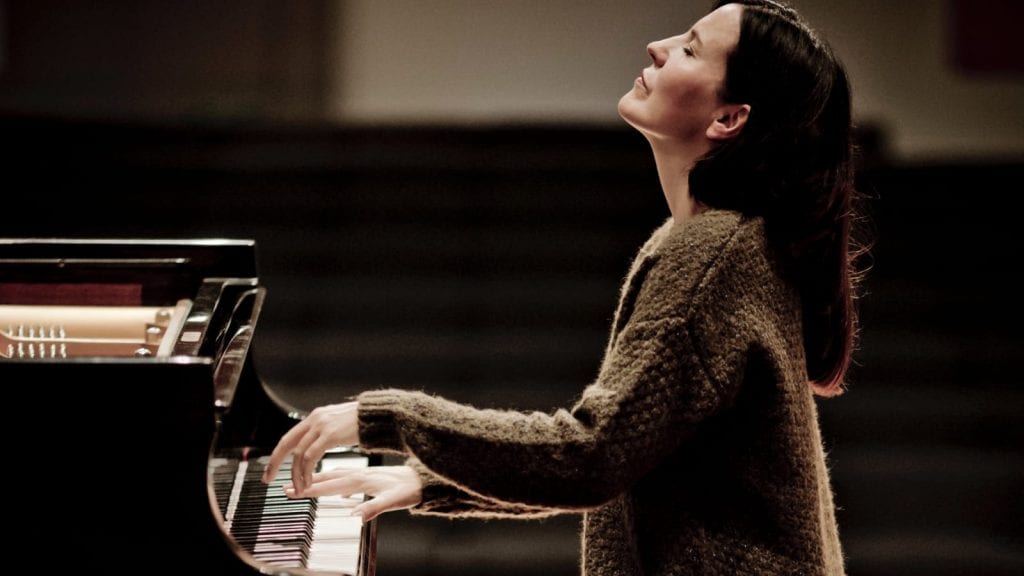
Alexandra Sostmann Playing the Piano (Photo: Marco Borggreve)
(Photo: Marco Borggreve)

Is there a specific sound you look for in a grand piano?

AS: First of all, you’re not always in the luxurious position of having, say, four grand pianos to choose from, as is the case at the Elbphilharmonie, for example. Often, you simply have to take whatever instrument is available on site and make the best of it. Even when playing in large concert halls, that can often be challenging. However, recording is naturally a different matter when it comes to pursuing my sonic vision.

I find that interesting, but sometimes it also goes too far. There’s a Bach recording by a pianist in which every suite has a different intonation. That means the grand piano was voiced to different degrees of softness, and different instruments were used as well. I just think that’s not how it is in reality.

Then there’s the example of Sviatoslav Richter, who wasn’t interested in any of that at all. He was given several grand pianos to choose from and said he felt completely overwhelmed by the choice. He asked them to simply set up one of the pianos for him, since he would probably end up choosing the wrong one (laughs).

Utimately, it's not about technical capabilities...

But I think that, ultimately, it’s not about technical capabilities. It’s about great musicality, imagination, creativity, and exceptional pianistic skill. Not in the sense of virtuoso display, but in terms of sound. And then I’d say it depends very much on the repertoire. You have to consider the musical period you’re dealing with. After all, Baroque music is played very differently from a Beethoven sonata.

You can really hear that on your latest album—the clarity of the Baroque works. It’s not just a matter of technique, but also of a very specific tonal quality.

AS: It takes a great deal of effort to really immerse yourself in it. There are many aspects involved, such as articulation, aesthetics, ornamentation, and the overall sound ideal of the time. You have to be familiar with the organ and the harpsichord and then, of course, with the piano. Back in the Baroque period, für Clavier (for clavier) was written with a C (!). And the term clavier with a C encompasses all keyboard instruments, it wasn’t intended specifically for the organ or the harpsichord.

I find that interesting, and there’s certainly some justification for that view, because there are still early music specialists who say, “Bach on a concert grand? How could anyone do that!” That’s nonsense, of course. As long as I adhere to the aesthetic principles, I think it makes perfect sense. And it also helps ensure that this music remains alive for us today. Quite simply because fewer people attend a harpsichord recital than a piano recital.

Do you also use digital instruments or software?

AS: Well, yes. There was a time when I needed an instrument to practice on during vacations. When you’re up in the mountains at over 2,000 metres (6,500 feet), concert grands are hard to come by. So I set up a digital piano there and was grateful that I could practise. What’s available today is truly remarkable. And for many people who simply don’t have the space for an acoustic piano, it’s the only option. I certainly wouldn’t want to dismiss digital technology altogether, especially since there have long been points of contact between classical music and electronics.

...it's all about emotion.

Finally, a question about practicing and learning—how do you approach it?

AS: Of course, practicing is important. Our profession is like elite sport. I believe that anyone who doesn’t have the passion to devote themselves to practicing for many hours every day will find it difficult to succeed in this profession. But it really depends on how you think about it. I genuinely enjoy practicing, and it doesn’t carry any negative connotations for me at all. I’m grateful to have the time and peace of mind to do it, and to be able to engage with something as wonderful as music. It’s an incredible privilege.

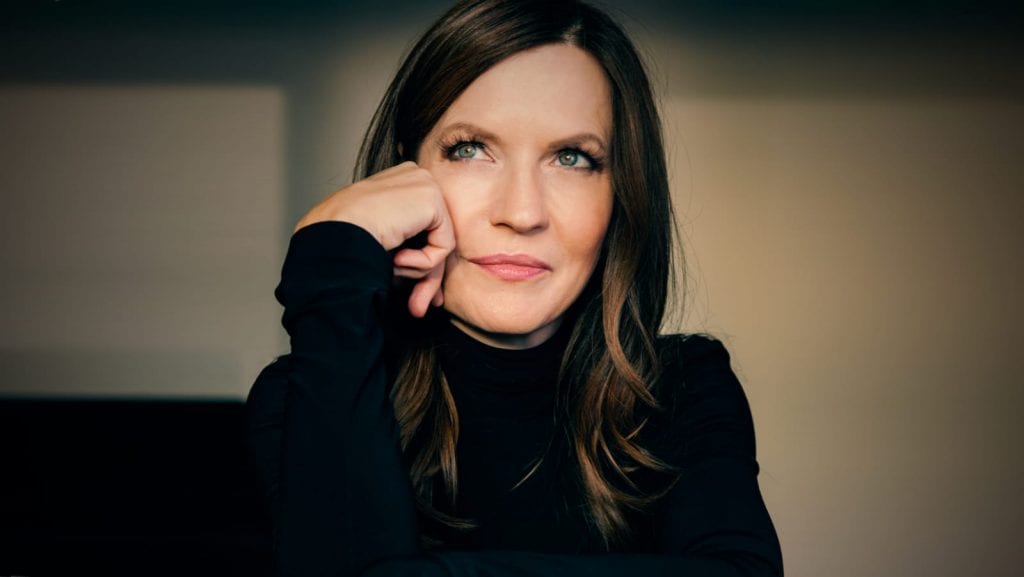
Alexandra Sostmann – Bach, Byrd, Gibbons + Contemporary Music (Photo: Anatol Kotte)
(Photo: Anatol Kotte)

When you practice, is the focus more on making music, on the actual playing itself, or on specific exercises and scales?

AS: I think that varies greatly from person to person. I start by warming up with a few specific exercises and scales. Then I think about what’s on the agenda. It’s always different: Do I need to learn something new? Am I maintaining my repertoire? Do I perhaps have a duo recital to prepare for at the same time, or am I researching the piece? The scope of that always varies. But what helps me is having a certain structure to my day and planning my practice sessions.

And then there are all the everyday tasks to take care of. I’m sure concert pianists have to deal with that as well, right?

AS: Of course, that’s all part of it—just normal life. And that influences you as well. It’s all very important. Empathy matters, because what happens around you ultimately flows into our creative work. It’s all about emotion.

…letting go of all that knowledge so everything can flow freely.

Perhaps we can put it this way: Emotion is the most important thing in music.

AS: Absolutely! Everything you’ve structured and learned beforehand—it’s about eventually letting go of all that knowledge so everything can flow freely. That’s really the goal. Whether that always works out is another matter entirely (laughs), but I’d say that’s what it’s all about.

What advice would you give to beginners and aspiring concert pianists?

AS: It’s so important not to look left and right, not to focus on what others are doing, but simply to follow your own path. That’s very important. And very difficult.

Internet Links

Alexandra Sostmann’s Official Website

Video for the 2014 album Bach + Contemporary Music

You are currently viewing a placeholder content from YouTube. To access the actual content, click the button below. Please note that doing so will share data with third-party providers.

More Information
ADVERTISEMENT

Related Articles

26.10.2026 · Buy Gifts for Musicians: Is a Piano the Only Option?

It doesn't have to be a grand piano—there are plenty of small and inexpensive gifts for musicians to choose from.

20.09.2025 · Buy Yamaha CLP-800 Series – Reviewing Clavinova Digital Pianos

In fall 2024, Yamaha announced the new CLP-800 series. The key refinements concern the sound generation and playback systems.

01.09.2025 · Buy Buyer’s Guide: A Portable Piano Under $2,000

With a scaled-down cabinet and speaker system, a portable piano under $2,000 offers a great keyboard and sound engine.

20.02.2025 · Buy Studiologic SL-mk2 Series – USB MIDI Controllers

The Italian manufacturer has introduced the new models of the Studiologic SL-mk2 series with new features and improved details.

20.02.2025 · Buy Speakers and Piano Sound: How Good Can Digital Pianos Really Sound?

Speakers and piano sound — does your digital piano sound better when you're using headphones? Find out why here.

13.02.2025 · Buy Kawai CN Series: CN-201 & CN-301

With their high-quality playability, the digital pianos in the Kawai CN series inspire both demanding beginners and advanced players.

09.02.2025 · Buy Product Review: Yamaha TransAcoustic Piano - Hybrid Piano

Piano or digital piano? The Yamaha TransAcoustic piano offers the best of both worlds. The perfect blend of acoustic and digital piano.

08.02.2025 · Buy Almost as Good as the Real Thing: Playing a Hybrid Digital Piano

Acoustic soundboard, grand piano action, and wooden keys: A hybrid digital piano combines maximum playing comfort with high-quality sound.

07.02.2025 · Buy Play Piano with Headphones: Hybrid Piano!

Play the piano with headphones - a hybrid piano combines an acoustic piano with a mute function and an electronic sound generation.

15.01.2025 · Buy Best Headphones for Digital Piano: Sound That Inspires

Buying high-quality headphones for digital piano: Why invest in good digital piano headphones and how much do they cost?

13.01.2025 · Buy Kawai ES Series: ES-920, ES520, ES-120, ES-60 – Portable Pianos

The Kawai ES Series is popular with beginners and advanced players alike: High-quality features at prices ranging from $400 to $1,200.

22.12.2024 · Buy Wireless MIDI: Play Piano or Keyboard Without Cables

Wireless MIDI systems are useful when the instruments themselves are not Bluetooth-compatible. But what makes a good Wireless MIDI adapter?