ADVERTISEMENT

Connecting a Digital Piano to an iPad: Piano Apps & More

  • There are several ways to connect an iPad to a digital piano, the easiest being a wireless connection via Bluetooth. Ideally, your digital piano supports USB MIDI/Audio.
  • Since you can’t connect an iPad and a digital piano directly with a USB cable, you’ll need an adapter to get started.
  • Digital pianos that do not support Bluetooth can be retrofitted with Bluetooth MIDI if they have a MIDI interface or USB.
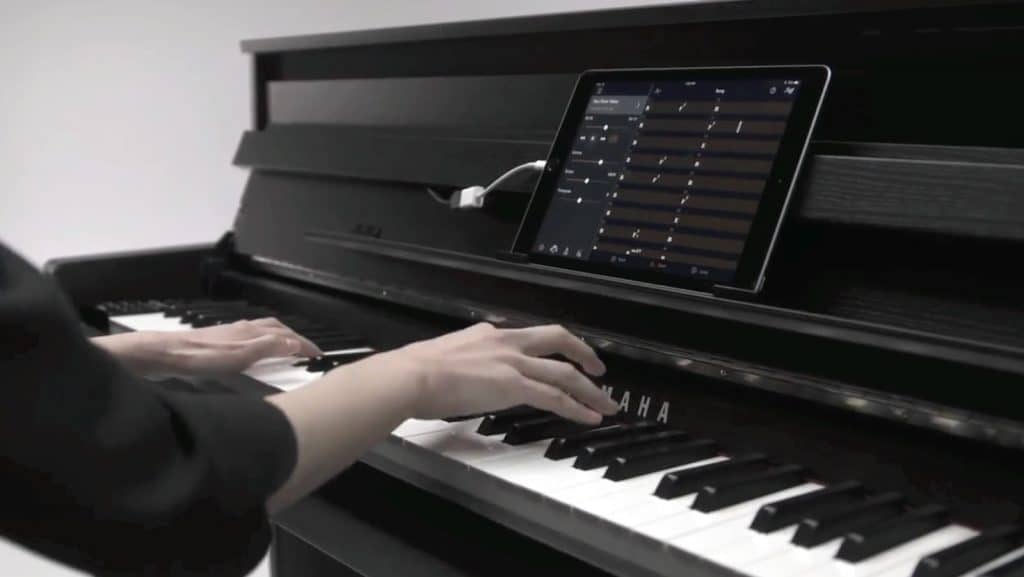
Piano remote apps, such as Yamaha's Smart Pianist, expand the possibilities and make the digital piano very convenient to use. (Image Source: Yamaha)
ADVERTISEMENT

Connect a digital piano to an iPad—the possibilities are endless! Piano remote apps not only allow you to play the piano, but also to access features such as notation, learning functions, audio recording, and sound editing. As a result, more and more manufacturers are moving the control of additional features to tablets or smartphones. After all, it’s a much more convenient input device than a digital piano with a small display could ever be. But there’s much more to discover!

ADVERTISEMENT
ADVERTISEMENT

While connecting a digital piano to an iPad is relatively simple, the technical capabilities of each digital piano will ultimately determine what you can actually do with it. There are big differences between digital piano models in this respect.

But first things first: Unfortunately, a direct connection between a digital piano and an iPad is not possible.

This was the case with the old 30-pin connector and remains this way with Lightning and USB-C connectors. Digital pianos have a simple USB port that you can use to connect to a computer. This works the same way as connecting a printer or other peripherals.

However, if you want to connect via USB to an iPad (as well as an iPhone), you will need the Camera Connection Kit.

iPad and Digital Piano – Double the Audio Source

This can be confusing, especially for beginners: If you want to listen to both digital piano and iPad audio through the audio system of the digital piano (with speakers or headphones), what connections and cables do you need? There are three options:

1. USB Audio/MIDI Function

Unfortunately, not all digital pianos support simultaneous MIDI and audio transmission via USB. However, if they do, it is possible to integrate a piano app into the audio system of the digital piano. For example, Yamaha’s latest digital pianos support the integration of Yamaha’s Smart Pianist piano app.

The USB Audio/MIDI function also allows digital pianos to easily connect to other piano apps or music programs such as Steinberg Cubasis or Garageband. In addition to Yamaha digital pianos like the P-145 or P-225 and even the smallest model NP-35 digital pianos from Dexibell, the Korg B2, Korg Liano and current Roland digital pianos such as the FP-30X also offer this function, which only requires a USB port.

Affiliate Links
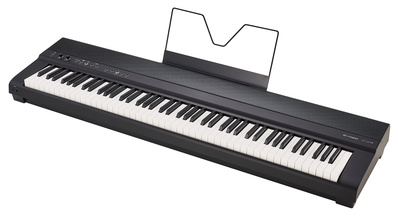
Thomann DP-28 Plus
Thomann DP-28 Plus
Customer rating:
(181)

2. MIDI via USB, Audio via Headphone Jack

If your digital piano does not support the USB Audio/MIDI function, you must use an audio cable to connect the audio signal of the iPad to the digital piano. For this, you’ll need a digital piano with audio input capability as well as an adapter, the type of which depends on your iPad.

  • iPad with Headphone Jack: You will need a mini jack adapter cable to connect to the audio input of your digital piano (usually 2x mono jack to stereo mini jack).
  • iPad with USB-C: Newer models only have a USB-C port. In this case, it is best to use a digital piano that can transmit both MIDI and audio data via USB. Otherwise, you will need a USB-C hub that offers as many different connection options as possible for both USB-C and USB-2/3. There are also models with a built-in audio output.
  • Audio Interface for iPad: For improved audio communication with the iPad, consider using a small audio interface.

For more tips on connecting and combining audio signals from the digital piano, iPad, and other devices, see “Connecting a Digital Piano to a Mixer“.

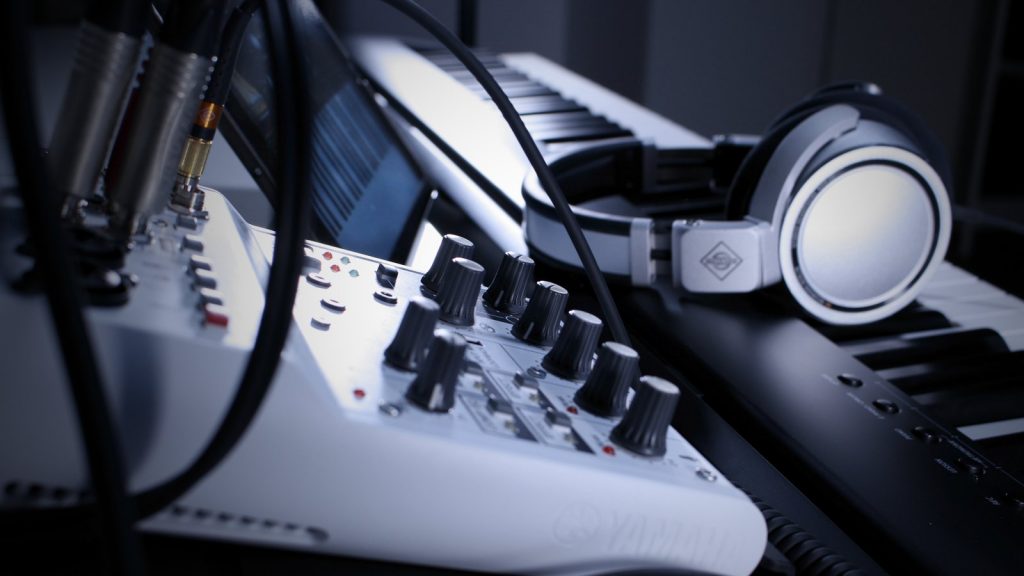
Connecting an iPad and digital piano to a mixer
A simple and inexpensive solution: If the digital piano or keyboard does not have audio inputs, you can mix the signals from the digital piano and the iPad using a small mixer.

3. iPad/iPhone Plus Audio Interface

The third option for connecting a digital piano to an iPad or iPhone is slightly more unique but especially interesting for anyone who has an iOS device without an analog audio output (phone jack). In this case, an audio interface is a good choice as even inexpensive ones offer good audio quality (definitely better than headphone adapters for USB-C or Lightning).

Given the existence of mixing and recording apps, it is worth considering transferring “audio sovereignty” to the iPad. This means using a piano app like e-Instruments Pure Piano and an audio mixing app like AUM on your iPad at the same time. The latter acts as a digital mixer, combining the signals from the piano app as well as external instruments.

Simply connect the audio outputs of the digital piano to the audio inputs of the audio interface. The AUM app then sends the mix to the headphone output. Of course, you can also connect studio monitors or a stereo system to the audio outputs of the audio interface.

For more information on AUM, visit the Kymatica website.

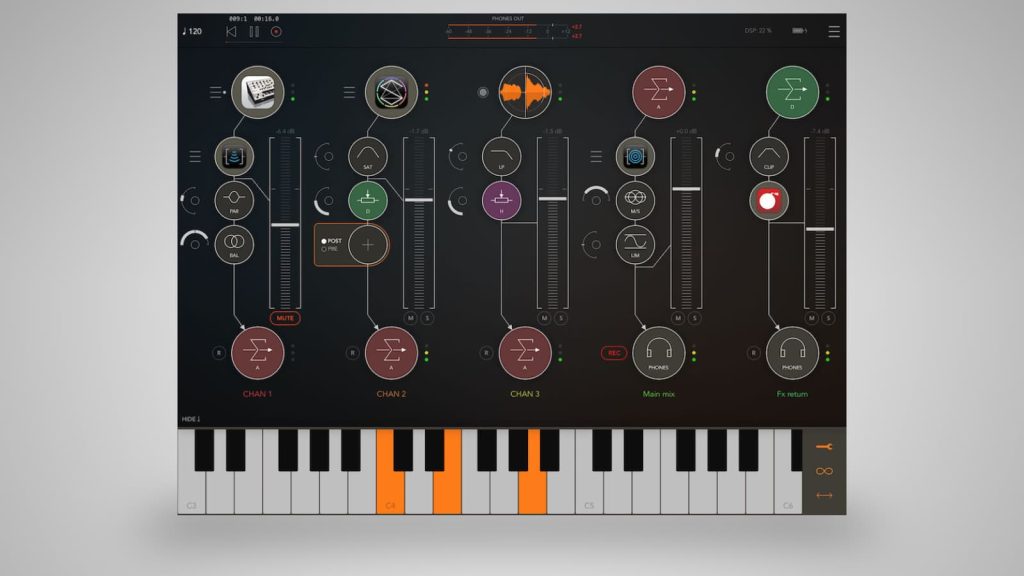
Powerful audio tool for the iPad. AUM by Kymatica is a flexible audio mixer, plug-in host and audio recorder. The app supports multi-channel interfaces and turns the iPad into a digital mixing console. (Image Source: Kymatica)

USB MIDI, Bluetooth MIDI, Bluetooth Audio, USB 2.0 or USB 3.0?

There are several different ways to combine a digital piano with an app, such as Bluetooth Audio and Bluetooth MIDI. Take a close look at your instrument as there can be technical differences between digital piano models.

Here are some quick technical basics:

  • USB 2.0: Digital pianos usually have a built-in “USB to Host” port. The data bandwidth of this USB 2.0 interface is more than sufficient for transmitting MIDI and audio data.
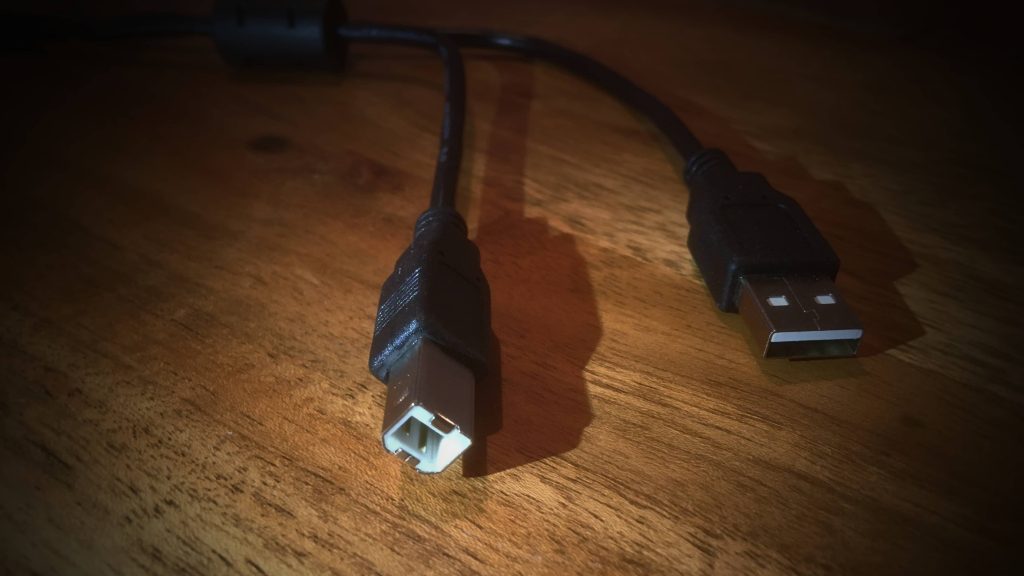
  • USB Connector Types: Digital pianos are typically equipped with a USB connector that accepts a Type B plug, meaning a standard printer cable is sufficient for connecting to other devices.
  • USB 3.0: Most current computers and tablets, including the Apple Camera Connection Kit, are designed for USB 3.0 but are compatible with USB 2.0. The connector is the standard Type A plug: a flat plug that is approximately 1 cm wide.
  • USB-MIDI: What data the digital piano transmits via USB depends on the model, although it is common for only MIDI data to be transmitted. However, more and more digital pianos can transmit both MIDI & digital audio data at the same time.
USB 2 Cable
Digital pianos are equipped with a USB 2.0 port for a Type-B plug (left).

Connecting a Digital Piano to an iPad via Bluetooth

This is the easiest and most convenient way to connect a digital piano to an iPad. While many digital piano models (starting around 2017) offer a Bluetooth interface, this does not mean that they all offer the same features. On the contrary, as there are big differences, it is important to know the differences between Bluetooth MIDI and Bluetooth Audio. In the rarest of cases, you can use both options at the same time, even if your digital piano supports both.

Digital Piano & Bluetooth Audio

This feature is typically used to wirelessly transmit audio from the iPad to the speaker system of the digital piano. It is useful for listening to audio songs or online lessons through headphones or the speakers of the digital piano. However, you cannot connect Bluetooth headphones to the digital piano because the delay in audio transmission makes playing the piano impossible. Further, audio playback makes no sense when playing a piano app, or rather is not supported by piano apps in the first place.

Digital Piano & Bluetooth MIDI

Wirelessly transfer digital piano functions to the iPad, including keyboard and pedal action, practice functions, recorder, split, layer, metronome, and more. Piano control apps such as Yamaha Smart Pianist, Roland Piano Partner, and Kawai PianoRemote communicate with the instrument to provide convenient remote control of the digital piano.

Tip: Some Yamaha digital pianos (CLP-600 series, P-515) support Bluetooth but not Bluetooth MIDI. Therefore, these digital pianos can only communicate with Smart Pianist via a USB connection.

Digital Piano Without Bluetooth?

It is expected that most new digital pianos will support Bluetooth. However, if this is not the case, there are still several ways to connect to a tablet, smartphone, or audio PC. Again, it depends on the features of your digital piano.

USB MIDI Connection via USB Cable
The simplest option: Almost every digital piano is equipped with a USB interface, some even have two. There are “USB to DEVICE” and “USB to HOST” connections. To connect your digital piano to an iPad, audio PC, or smartphone, use the latter. For connecting to an iPad or iPhone, you also need a Camera Connection Kit.

Bluetooth MIDI Adapter
If the digital piano has a MIDI interface with MIDI In and MIDI Out, a Bluetooth adapter such as the Yamaha MD-BT01 is recommended to establish a wireless connection and convert USB MIDI to Bluetooth MIDI. However, you need at least a USB port on your instrument.

WiFi Adapter – Wireless WiFi Connection
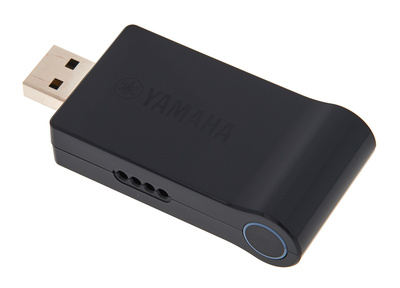
This primarily affects Yamaha instruments that support the Smart Pianist app, such as the Clavinova models or the Yamaha P-515 portable piano. Since instruments cannot connect to WiFi themselves, special accessories are required. For example, the UD-WL01 USB Wi-Fi adapter (about $80) plugs into the USB to DEVICE port of the digital piano. To use the app, you must connect both the adapter and iPad to the same wireless network.

Using a MIDI Interface for the iPad
Does your digital piano have a standard MIDI interface? If so, using it to connect to your instrument is a great idea. To do this, you need to add a MIDI interface such as the IK Multimedia iRig MIDI 2 to your tablet or smartphone.

→ PIANOO Guide: Digital Piano and Bluetooth

Affiliate Links
Yamaha UD-WL01 Wireless LAN-Adapter
Customer rating:
(29)

Connecting the iPad with the Camera Connection Kit

Unfortunately, there is no way to directly connect the Lightning cable of Apple devices to a digital piano. Even if you think you have the right connector, the USB to DEVICE port is not designed to connect an iPad to a digital piano.

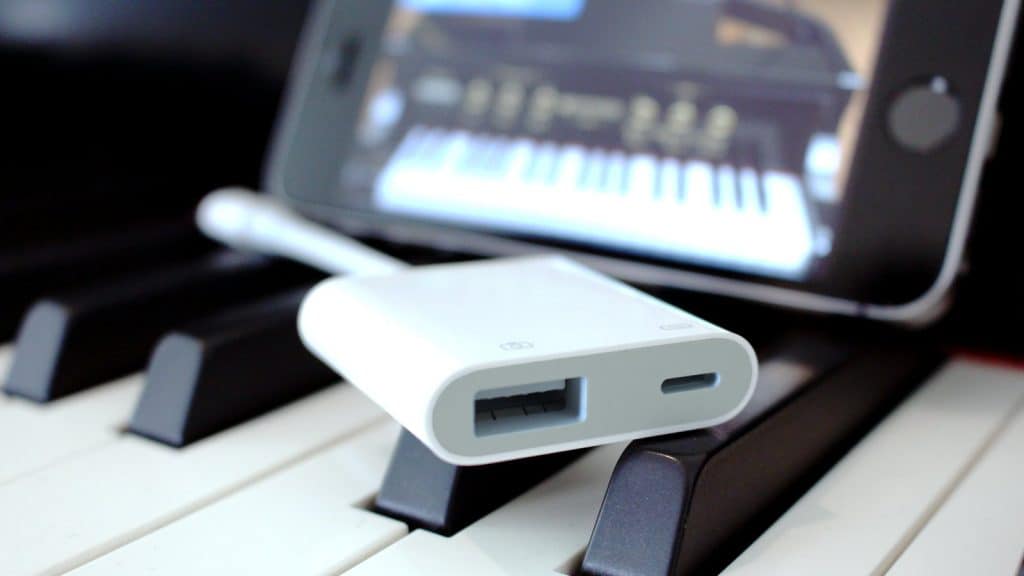
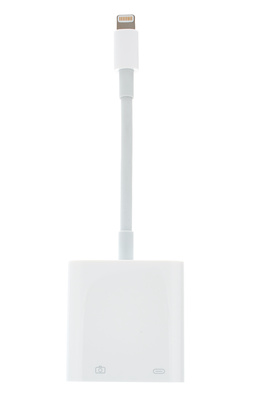
Instead, you need the Apple Camera Connection Kit to connect the iPad and iPhone via USB, costing approximately 45 Euros. The adapter plugs into the Lightning connector on the iOS device and provides a USB port on the other end for connection to the USB to Host port on the digital piano.

Important to know: The iPad and iPhone are not automatically powered via USB, as is the case with bus-powered audio interfaces. To power the iOS devices, simply connect the charger of the iOS device to the Lightning connector of the Camera Connection Kit.

Connecting the iPad to the piano using the Lightning Camera Connection Kit: You should choose the adapter with the additional Lightning connector, which powers the iPad/iPhone during operation.

Camera Connection Kit for USB-C

Since newer iPad models have a USB-C port, Apple also offers a USB-C-compatible Camera Connection Kit. However, this purchase only makes sense if the digital piano supports the USB Audio/MIDI function. Unfortunately, many digital piano models only offer USB MIDI.

New iPad models also have no audio output or headphone jack. In this case, consider a full-featured USB-C multimedia hub with support for multiple USB formats and a mini-jack audio output.

Affiliate Links
Apple Lightning auf USB 3.0 Adapter
Customer rating:
(152)

FAQ: Connecting digital piano and iPad

What is Low Energy Bluetooth MIDI?

Most iOS apps can now connect to Bluetooth MIDI on their own. In this case Bluetooth pairing in the Bluetooth settings of your mobile device is not needed. However, if you are using an older iPad with earlier versions of the iOS app, you may need an additional app to establish a so-called “Bluetooth Low Energy” (BLE) connection. An example is the free “BLE-MIDI” app from Korg.

To pair the devices, open the BLE app (not the Bluetooth menu in the iOS system settings as usual). All music apps will then access the MIDI connection from there. While some apps do this automatically, you may also need to manually add some to your Bluetooth MIDI network.

MIDI Interface for iPad and iPhone?

In addition to the wireless MIDI connection, the classic connection using MIDI ports should not be ignored. Connecting a MIDI interface (e.g. IK Multimedia iRig MIDI 2) to the iPad or iPhone makes sense if you only want to control a piano app or use the digital piano with a sequencer such as Garageband or Steinberg Cubasis. If you’re on the go, a classic MIDI interface is always a safer bet. For home use, a Bluetooth MIDI adapter may be more practical, especially if the MIDI ports are located on the back of the digital piano.

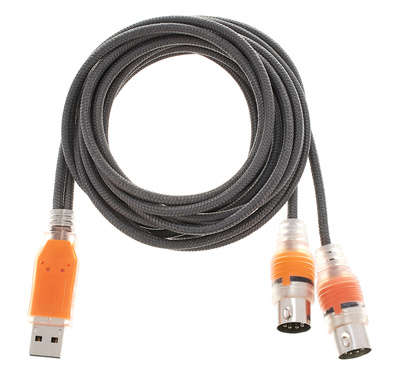
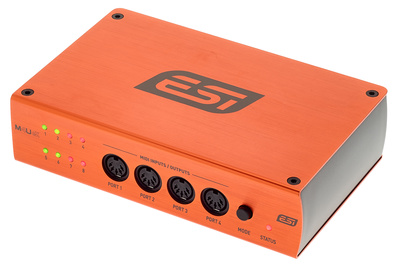
The advantage of the IK Multimedia iRig MIDI is that it comes with adapter cables that allow you to connect it directly to the Lightning port of iOS devices. This eliminates the need for the Camera Connection Kit, though it remains the more flexible solution. On the general side, all you really need is a simple USB MIDI interface with In and Out ports. These are available for as little as 25 Euros, such as the MidiMate eX from ESI. The manufacturer also offers other recommended interfaces, which are interesting for those who want to combine several MIDI devices.

Affiliate Links
ESI MidiMate eX
ESI MidiMate eX
Customer rating:
(368)
ESI M4U eX
ESI M4U eX
Customer rating:
(103)

How to transmit Bluetooth audio?

Audio transmission to the built-in speaker system is useful to play along to minus-one-tracks or do online lessons. If your digital piano doesn’t support Bluetooth audio, you can use a Bluetooth transmitter to wirelessly transmit music (audio songs, YouTube videos, etc.) to the speaker system of the digital piano. This device connects to the audio input of the digital piano using an adapter cable.

Particularly if you have a new iOS device, which does not have an analog audio output, a Bluetooth transmitter is a good solution. Even though you also have to buy a long audio cable with a mini jack, a Bluetooth adapter is no more expensive than alternatives. And has the advantage of a wireless connection, which is especially convenient if you use the iPad to read sheet music.

Reading Sheet Music With iPad & Co?

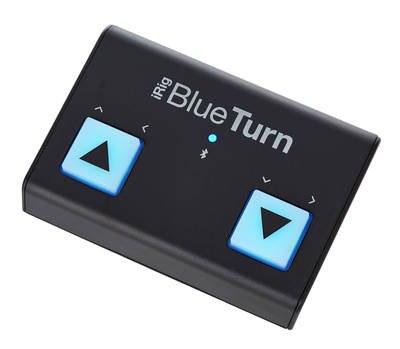
Mobile devices are becoming increasingly popular as digital music archives. After all, they are a practical addition to the traditional sheet music folder—the advantages of sheet music apps are obvious: You can store thousands of sheets of music on a tablet and quickly retrieve them when needed. A handy feature is the page-turner, which allows you to turn the pages hands-free using a Bluetooth footswitch. IK Multimedia’s Blue Turn is a great value in this category.

Affiliate Links
IK Multimedia iRig BlueTurn
Customer rating:
(475)

Piano World Piano Forum Discussions:

MIDI and iPad Connection

MIDI and Audio from iPad Combined With Piano Sound

PIANOO.com Guide: Connecting a Digital Piano to a Mixer

*Affiliate link. These “advertising links” help us finance our website. If you purchase a product through one of these links, we receive a small commission at no additional cost to you. The PIANOO.com team thanks you for your support!

ADVERTISEMENT

Related Articles

20.09.2025 · Buy Yamaha CLP-800 Series – Reviewing Clavinova Digital Pianos

In fall 2024, Yamaha announced the new CLP-800 series. The key refinements concern the sound generation and playback systems.

01.09.2025 · Buy Buyer’s Guide: A Portable Piano Under $2,000

With a scaled-down cabinet and speaker system, a portable piano under $2,000 offers a great keyboard and sound engine.

20.02.2025 · Buy Studiologic SL-mk2 Series – USB MIDI Controllers

The Italian manufacturer has introduced the new models of the Studiologic SL-mk2 series with new features and improved details.

20.02.2025 · Buy Speakers and Piano Sound: How Good Can Digital Pianos Really Sound?

Speakers and piano sound — does your digital piano sound better when you're using headphones? Find out why here.

13.02.2025 · Buy Kawai CN Series: CN-201 & CN-301

With their high-quality playability, the digital pianos in the Kawai CN series inspire both demanding beginners and advanced players.

09.02.2025 · Buy Product Review: Yamaha TransAcoustic Piano - Hybrid Piano

Piano or digital piano? The Yamaha TransAcoustic piano offers the best of both worlds. The perfect blend of acoustic and digital piano.

08.02.2025 · Buy Almost as Good as the Real Thing: Playing a Hybrid Digital Piano

Acoustic soundboard, grand piano action, and wooden keys: A hybrid digital piano combines maximum playing comfort with high-quality sound.

07.02.2025 · Buy Play Piano with Headphones: Hybrid Piano!

Play the piano with headphones - a hybrid piano combines an acoustic piano with a mute function and an electronic sound generation.

15.01.2025 · Buy Best Headphones for Digital Piano: Sound That Inspires

Buying high-quality headphones for digital piano: Why invest in good digital piano headphones and how much do they cost?

13.01.2025 · Buy Kawai ES Series: ES-920, ES520, ES-120, ES-60 – Portable Pianos

The Kawai ES Series is popular with beginners and advanced players alike: High-quality features at prices ranging from $400 to $1,200.

22.12.2024 · Buy Wireless MIDI: Play Piano or Keyboard Without Cables

Wireless MIDI systems are useful when the instruments themselves are not Bluetooth-compatible. But what makes a good Wireless MIDI adapter?

20.12.2024 · Buy Studiologic SL Series: SL73/88 Studio, SL88 Grand, SL|Mixface

The Studiologic SL series offers USB MIDI controllers with high-qualtiy hammer action keyboards for MIDI studio and live use.