ADVERTISEMENT

Review: 8Dio 1969 Steinway Legacy Grand Piano

  • The 8Dio 1969 Steinway Legacy Grand Piano is a virtual instrument library for Native Instruments Kontakt or the free Kontakt Player.
  • With a focus on atmospheric sound, it is particularly well-suited for film and media production.
  • However, noticeable dynamic jumps can affect playability, which limits its use as a fully fledged software instrument.
8dio-1969-steinway-image
ADVERTISEMENT

The 8Dio 1969 Steinway Legacy Grand Piano is based on extensive sampling of a 1969 Steinway Model D. Designed for use with Native Instruments Kontakt, this instrument is ideal for film and media composition. In addition to its acoustic piano tone, the various layered electronic textures are especially noteworthy.

ADVERTISEMENT
ADVERTISEMENT

8Dio 1969 Steinway Piano: An Atmospheric Sound

From the moment you play your first melodies and chords on the 1969 Steinway, you’re instantly transported to a cinematic world. This comes as no surprise, as 8Dio is known for its cinematic sounds. Play a few notes of the Forrest Gump theme, and you’ll know right away: This works! Click here for sound samples…

Not Too Bright, Not Too Dark

The 8Dio 1969 Steinway Legacy Piano sounds clear and present without being overly forward. Notes in the upper register sound slightly brighter. This makes it easier to play melodies with the right hand while accompanying them with the left hand without the two parts clashing. I particularly like the sound in softer passages. Add a touch of reverb, and you can create beautiful soundscapes with just a few arpeggios.

Velocity Sensitivity Isn’t Always Predictable

The piano sounds convincing as long as you stay within a certain dynamic range, for example, in the piano or pianissimo range. Unfortunately, maintaining that consistency isn’t always easy: Even a slight increase in playing intensity can cause individual notes to stand out noticeably. When exploring the instrument’s dynamic response, you’ll quickly notice distinct jumps in timbre between the individual velocity layers. Even with a consistent touch, some notes sound significantly louder than others.

As a result, dynamic control is noticeably compromised. When recording, I had to manually adjust the velocity values of certain notes in the DAW to achieve a more even, balanced sound.

8dio-1969-steinway-settings3
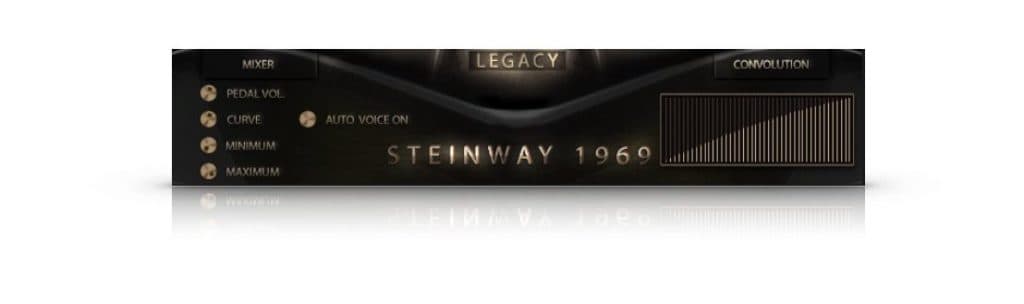
You can adjust the dynamic curve in the settings.

Complex Microphone Setup

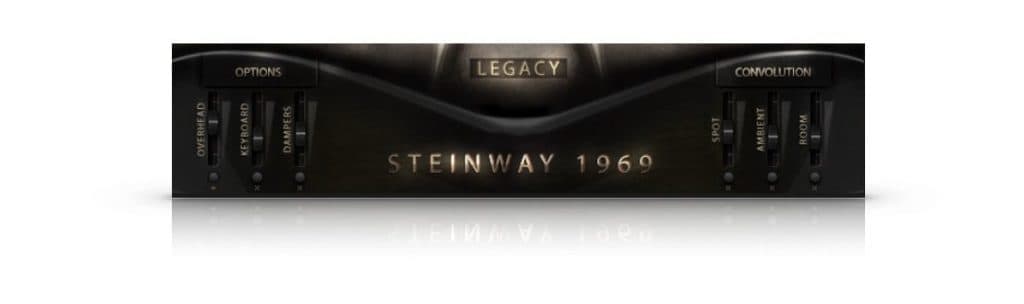
The Steinway Model D was recorded from six different microphone positions: overhead, player position, dampers, spot, ambient, and room. Each can be activated individually and adjusted in level. These multiple mic positions allow you to precisely tailor the piano sound to your preferences. Would you prefer a perspective closer to the pianist’s position, a more direct sound from the dampers, or a stronger emphasis on the room ambience?

Lots of Settings, Not Much Added Value

At least, that’s the theory. In practice, you’ll probably stick with the default settings. Even if you’re attentive to subtle tonal differences—and they are indeed subtle here—some of them are only noticeable when using headphones. From a few meters away, let alone in a mix with other instruments, the added value of all these microphone positions becomes questionable. Two or three would likely have been sufficient.

8dio-steinway-1969-microphone-positions
Unfortunately, the six individually selectable microphone positions do not deliver the expected added value in terms of sound design.

Layered Sounds for Sound Design

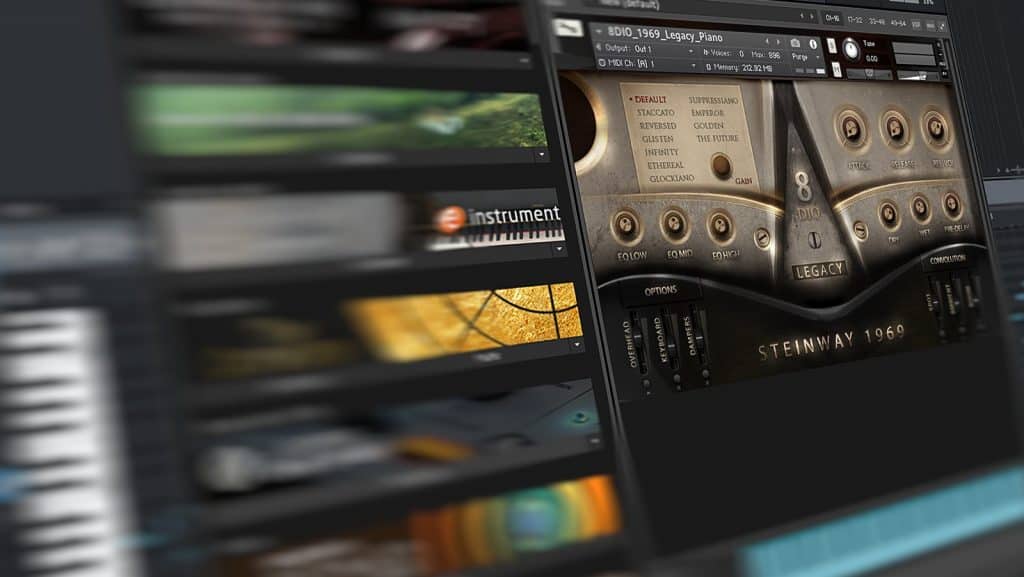
One standout feature is the ability to blend electronic layers with the piano sound as desired. Presets include Staccato, Reversed, Infinity, Ethereal, Glockiano, Emperor, and The Future. The sounds range from percussive elements to pad-like textures, highlighting what this instrument is truly designed for: atmospheric, cinematic composition. All of the presets are well-crafted and instantly add a modern character to the piano sound, making them ideal for hybrid electronic soundtracks.

Conclusion

The 8Dio 1969 Steinway Legacy Grand Piano truly shines in cinematic contexts. It excels with a beautiful core tone that is ideal for creating atmosphere, as well as with its electronic layered sounds, which are perfectly suited for modern film scoring. Personally, I see this library more as a production tool than as a fully fledged piano instrument for performance—the dynamic response simply isn’t convincing enough for that.

8Dio 1969 Steinway Legacy Grand Piano – Overview

Concept: Sample library for Native Instruments Kontakt (version 5.5 or later)
Library size: 5 GB
System requirements: Full version of Kontakt required, 4 GB RAM recommended
Developer: 8Dio
Price: $149

8Dio 1969 Steinway Legacy Grand Piano – Audio Clips

You are currently viewing a placeholder content from SoundCloud. To access the actual content, click the button below. Please note that doing so will share data with third-party providers.

More Information

Lukas Ruschitzka

The 8Dio 1969 Steinway Legacy Grand Piano truly shines in cinematic contexts. Here, it excels with a beautiful core tone.


1969 Legacy Grand Piano :   98 €

TO THE OFFER

1969 Legacy Grand Piano :   98 €

TO THE OFFER
ADVERTISEMENT

Piano software · Piano sound · Piano-VST · Software instrument

Review

ADVERTISEMENT

Related Articles

08.11.2026 · Buy Casio Privia Series: PX-S5000, PX-S6000 & PX-S7000

Stylish design, smart operation, plenty of great piano sounds, and many features: The new Casio Privia PX-S7000, PX-S6000 & PX-S5000.